
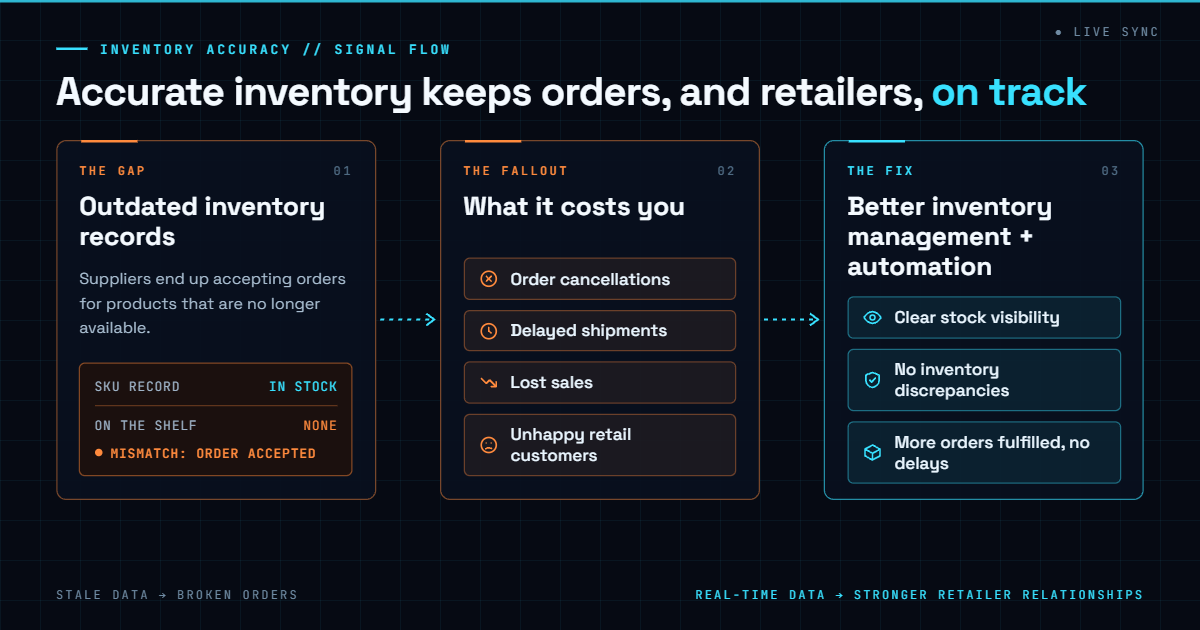
 For retail suppliers, maintaining accurate inventory information is essential to fulfilling orders and keeping retailer relationships strong. When inventory records are outdated or inaccurate, suppliers risk accepting orders for products that are no longer available.
These inventory problems can lead to order cancellations, delayed shipments, lost sales, and unhappy retail customers.
With better inventory management and automated processes, suppliers can improve stock visibility, prevent inventory discrepancies, and fulfill more orders without unnecessary operational delays.
Maintain Accurate Inventory Information
One of the most common causes of order cancellations is inaccurate inventory data. When inventory records do not reflect actual stock levels, suppliers may accept purchase orders they cannot fulfill.
Regular inventory updates help businesses maintain accurate product quantities and avoid promising products that are unavailable.
Synchronize Inventory Across Retailers and Sales Channels
Suppliers selling through multiple retailers and sales channels often struggle to keep inventory information consistent.
Automated inventory synchronization helps distribute updated stock information across connected platforms, reducing the risk of overselling and conflicting inventory records.
Using EDI 846 (Inventory Inquiry/Advice), suppliers can exchange inventory information with retail partners and provide better visibility into product availability.
Monitor Stock Levels and Replenishment Needs
Waiting until products are completely out of stock before replenishing inventory can result in missed orders and fulfillment delays.
Suppliers should monitor stock levels, identify fast-moving products, and establish replenishment thresholds. This allows purchasing and warehouse teams to prepare for demand before inventory runs low.
Better inventory planning helps businesses avoid stockouts while preventing unnecessary overstocking.
Improve Order Processing and Inventory Updates
When purchase orders are processed manually, inventory information may not be updated immediately. This creates a gap between available stock and actual customer demand.
Automating purchase order processing helps suppliers update inventory records more efficiently as orders are received and fulfilled.
EDI transactions such as EDI 850 (Purchase Order), EDI 855 (Purchase Order Acknowledgment), and EDI 856 (Advance Ship Notice) help streamline communication between suppliers and retailers.
Improve Warehouse Inventory Visibility
Accurate inventory management requires coordination between warehouse operations and business systems.
Suppliers should maintain visibility into available stock, reserved inventory, pending shipments, and received products. Integrating warehouse management systems with ERP and EDI platforms helps keep inventory information consistent across departments.
This reduces picking errors, prevents duplicate order allocation, and improves fulfillment accuracy.
How SBSA Technology Can Help
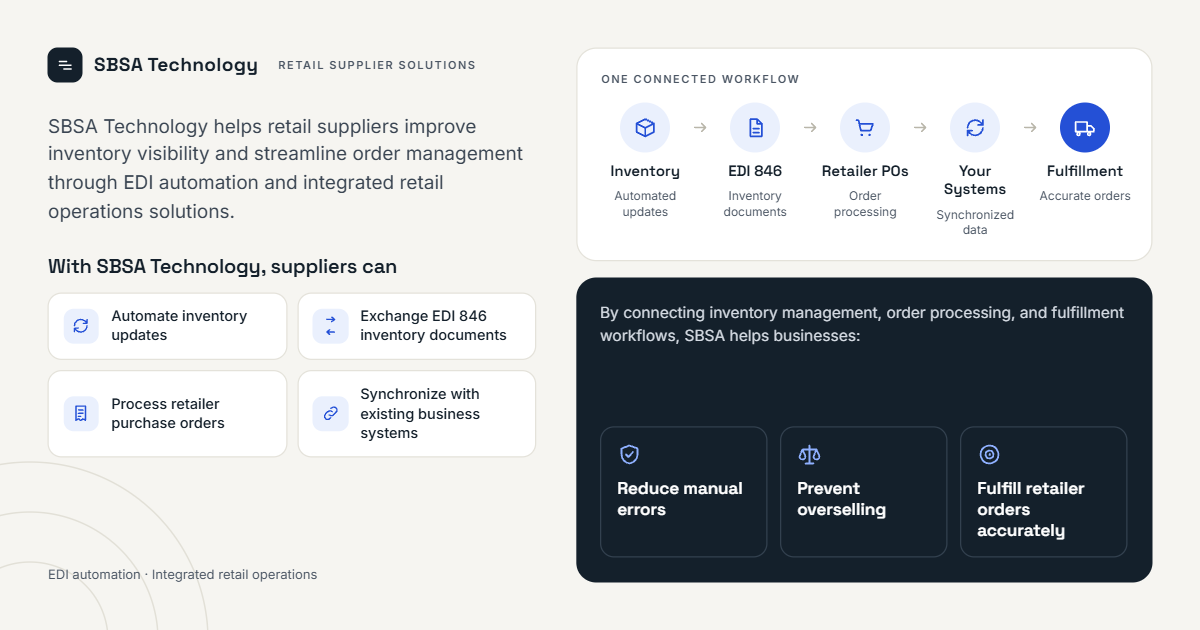 SBSA Technology helps retail suppliers improve inventory visibility and streamline order management through EDI automation and integrated retail operations solutions.
With SBSA Technology, suppliers can automate inventory updates, exchange EDI 846 inventory documents, process retailer purchase orders, and synchronize information with their existing business systems.
By connecting inventory management, order processing, and fulfillment workflows, SBSA helps businesses reduce manual errors, prevent overselling, and improve their ability to fulfill retailer orders accurately.
Final Thoughts
Order cancellations and lost sales are not always caused by insufficient inventory. In many cases, they result from inaccurate stock information, delayed updates, and disconnected business systems.
By improving inventory visibility, automating stock updates, and integrating warehouse and order management processes, retail suppliers can reduce preventable cancellations and make better use of their available inventory.
Better inventory management helps suppliers fulfill more orders, maintain retailer relationships, and support sustainable business growth.
Looking to automate your EDI transactions? Contact SBSA Technology to learn how our EDI solutions can support your business.
- Book a demo: sbsatech.com/consultancy
- Talk to the team: sbsatech.com/contact
- Explore the platform: sbsatech.com
- More insights: sbsatech.com/blog