
What Is EDI 990?
EDI 990 (Response to a Load Tender) is an electronic transaction used by motor carriers to communicate whether they accept or reject a shipment request received through EDI 204.
Instead of relying on phone calls or emails, carriers can electronically confirm their availability and respond to load tenders. This helps shippers coordinate freight schedules, manage carrier assignments, and avoid unnecessary delays.
How Does the EDI 990 Process Work?
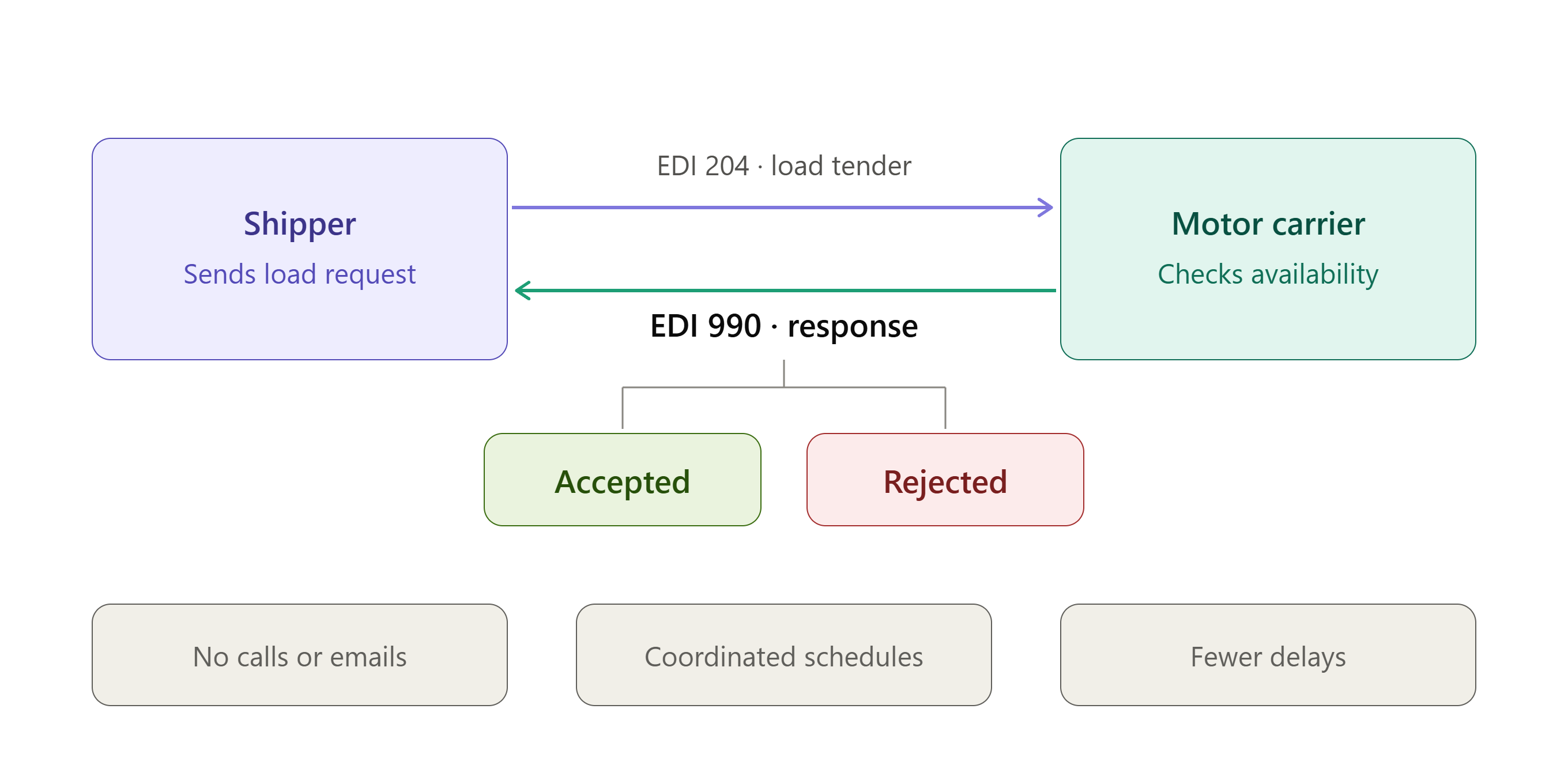 The EDI 990 process typically follows these steps:
-
Load Tender Sent: The shipper sends an EDI 204 containing shipment and transportation details.
-
Carrier Reviews the Request: The carrier checks shipment requirements, pickup schedules, and available capacity.
-
Carrier Responds: The carrier sends an EDI 990 indicating acceptance or rejection.
-
Shipper Updates the Shipment: The shipper's system processes the response and updates the carrier assignment or arranges an alternative provider.
EDI 204 vs. EDI 990 vs. EDI 214
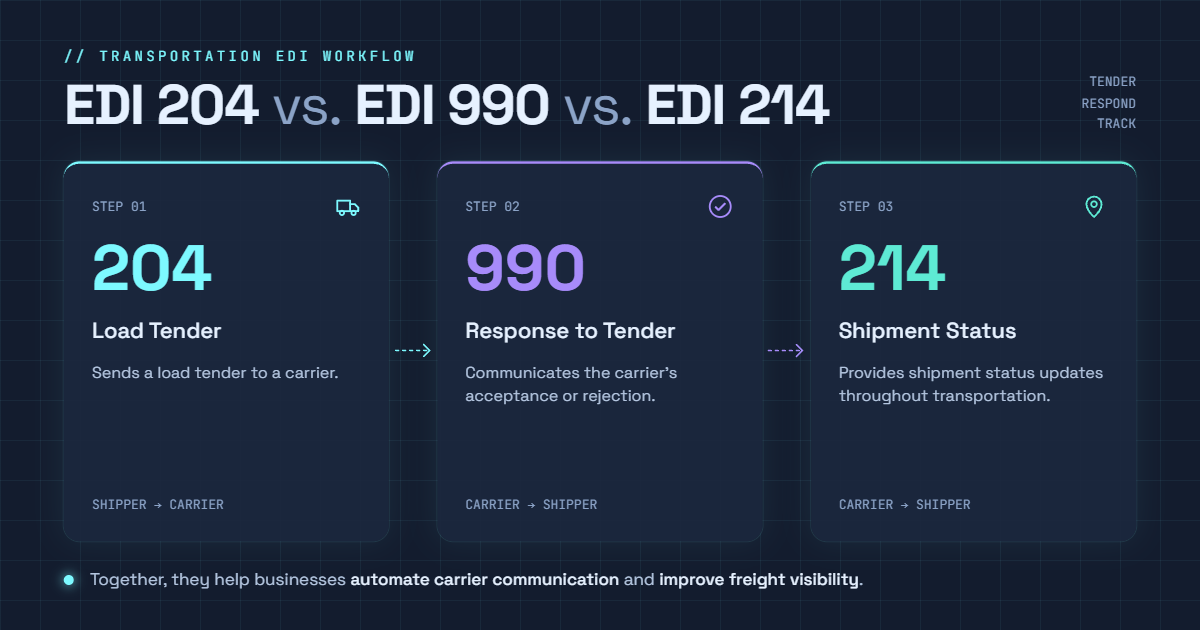 These three EDI transactions work together to automate transportation workflows:
-
EDI 204: Sends a load tender to a carrier.
-
EDI 990: Communicates the carrier's acceptance or rejection.
-
EDI 214: Provides shipment status updates throughout transportation.
Together, they help businesses automate carrier communication and improve freight visibility.
Benefits of Automating EDI 990
Automating EDI 990 offers several advantages:
-
Faster Carrier Confirmations: Eliminates unnecessary manual calls and emails.
-
Reduced Scheduling Delays: Helps identify rejected loads and arrange alternative carriers.
-
Improved Accuracy: Reduces manual data entry and shipment reference errors.
-
Better Transportation Visibility: Keeps carrier responses connected to shipment records.
-
Streamlined Operations: Helps manage multiple carriers and transportation requests more efficiently.
How SBSA Technology Helps Automate EDI 990
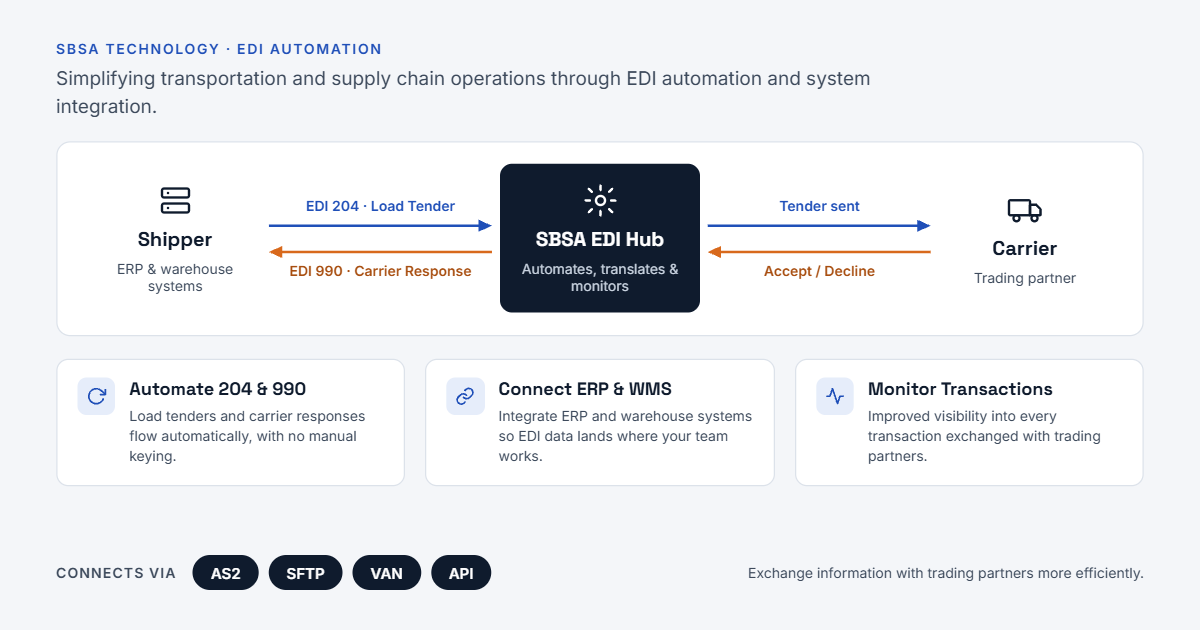
SBSA Technology helps businesses simplify transportation and supply chain operations through EDI automation and system integration.
With SBSA's EDI solutions, businesses can automate EDI 204 load tenders and EDI 990 carrier responses, connect their ERP and warehouse systems, and improve transaction monitoring.
SBSA supports EDI communication through AS2, SFTP, VAN, and API integrations, helping businesses exchange information with their trading partners more efficiently.
Final Thoughts
EDI 990 helps businesses automate carrier acceptance and rejection, reducing manual communication and improving freight scheduling. When combined with EDI 204 and EDI 214, it creates a more connected transportation workflow.
Looking to simplify your transportation operations? Contact SBSA Technology to learn how our EDI automation solutions can streamline your business processes and improve supply chain efficiency.
- Book a demo: sbsatech.com/consultancy
- Talk to the team: sbsatech.com/contact
- Explore the platform: sbsatech.com
- More insights: sbsatech.com/blog