
Inventory accuracy is essential for suppliers, distributors, and warehouse operators. However, differences between recorded inventory and actual stock can happen because of damaged products, lost items, receiving errors, warehouse transfers, or manual data entry mistakes.
When inventory changes are not properly documented, businesses may experience inaccurate stock levels, fulfillment delays, and costly operational errors.
EDI 947 (Warehouse Inventory Adjustment Advice) helps businesses communicate inventory adjustments electronically between warehouses and trading partners. Instead of relying on manual reports, spreadsheets, or emails, companies can use EDI 947 to share inventory corrections and keep their records updated.
What Is EDI 947?
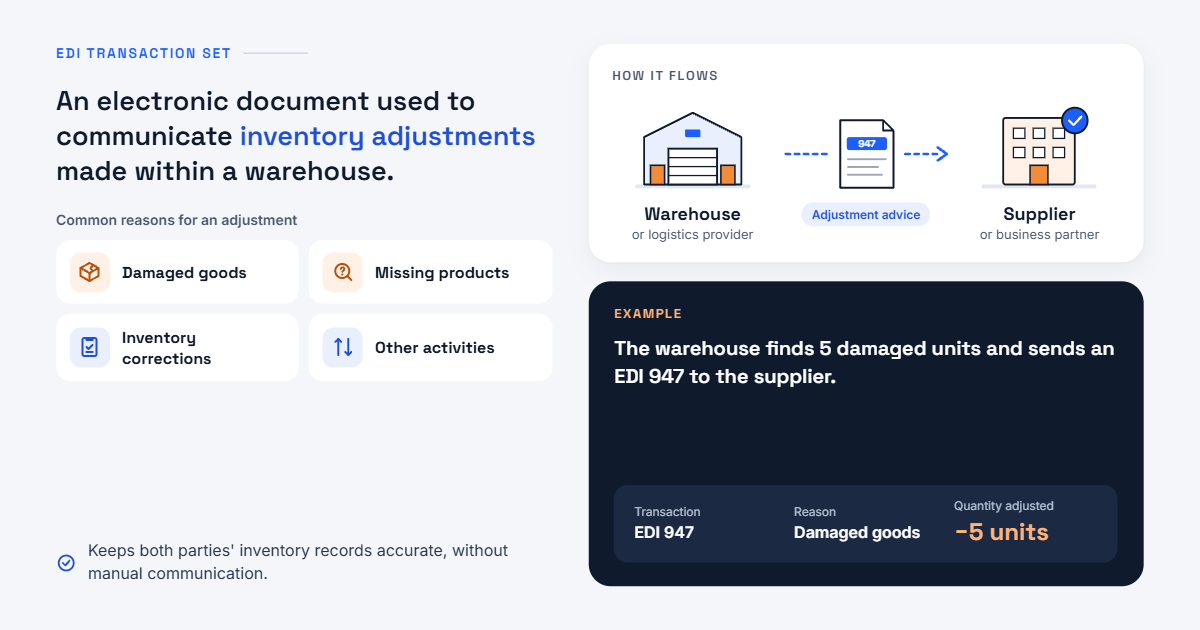 EDI 947 is an electronic document used to communicate inventory adjustments made within a warehouse.
It allows a warehouse or logistics provider to notify a supplier or business partner when inventory quantities have changed. These adjustments may involve increases or decreases caused by damaged goods, missing products, inventory corrections, or other warehouse activities.
For example, if a warehouse discovers that five units of a product are damaged, it can send an EDI 947 transaction to notify the supplier of the adjustment.
This helps both parties maintain more accurate inventory records without depending on manual communication.
How Does EDI 947 Work?
The EDI 947 process typically involves the following steps:
-
Inventory Adjustment Identified: The warehouse identifies a difference between the recorded inventory and the actual quantity available.
-
Adjustment Recorded: The warehouse documents the affected product, quantity, adjustment reason, and other relevant details.
-
EDI 947 Generated: The warehouse management system generates an EDI 947 transaction containing the adjustment information.
-
Transaction Transmitted: The document is transmitted electronically to the supplier or designated trading partner through an EDI connection.
-
Inventory Records Updated: The receiving system processes the adjustment and updates the corresponding inventory records.
-
Confirmation and Reconciliation: Both parties can review the adjustment information and reconcile their inventory records.
This automated process reduces the need for manual inventory updates and improves communication between warehouses and suppliers.
Common Uses of EDI 947
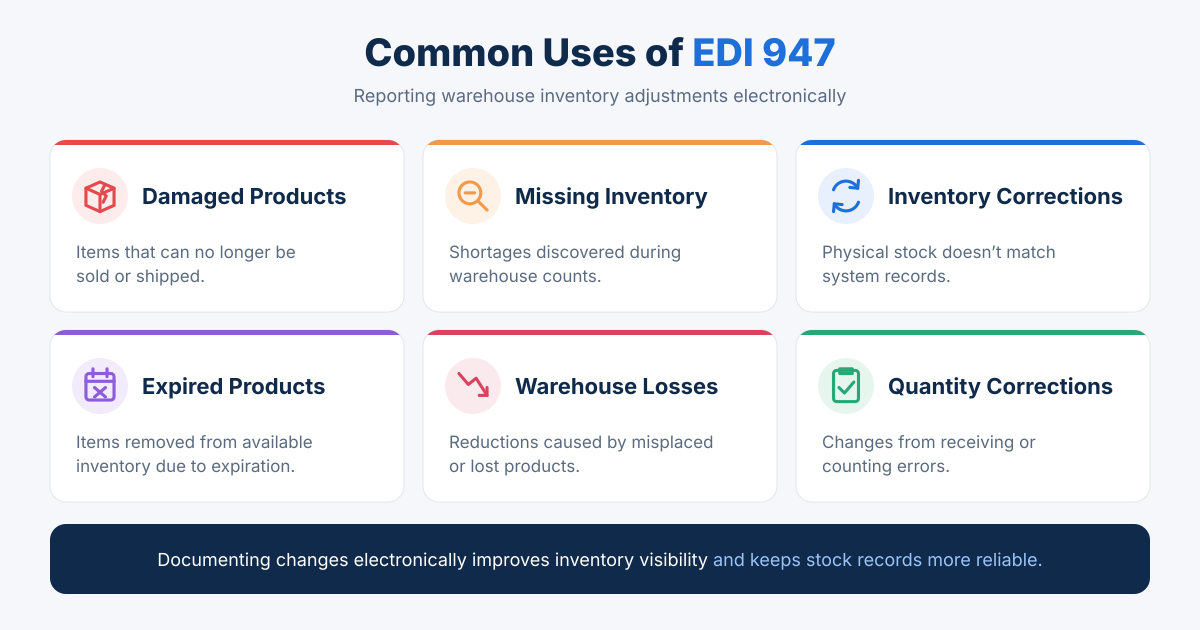 Businesses can use EDI 947 to report different types of warehouse inventory adjustments, including:
-
Damaged Products: Reporting items that can no longer be sold or shipped.
-
Missing Inventory: Communicating shortages discovered during warehouse counts.
-
Inventory Corrections: Adjusting quantities when physical stock does not match system records.
-
Expired Products: Reporting items removed from available inventory due to expiration.
-
Warehouse Losses: Documenting inventory reductions caused by misplaced or lost products.
-
Quantity Corrections: Reporting changes resulting from receiving or counting errors.
By documenting these changes electronically, businesses can improve inventory visibility and maintain more reliable stock records.
Key Benefits of EDI 947 for Suppliers
1. Improved Inventory Accuracy
EDI 947 helps suppliers receive timely updates about warehouse inventory changes. This makes it easier to keep internal inventory records aligned with actual warehouse stock.
2. Reduced Manual Data Entry
Automating inventory adjustment reports eliminates much of the repetitive work associated with spreadsheets, emails, and manual system updates.
3. Better Warehouse Visibility
Suppliers can gain better visibility into inventory changes, including damaged, missing, or adjusted products.
4. Faster Inventory Reconciliation
Electronic adjustment notifications help businesses identify discrepancies and resolve inventory differences more efficiently.
5. Fewer Operational Errors
Standardized electronic transactions reduce the risk of incorrect quantities, missing information, and communication errors.
6. Improved Coordination with Trading Partners
EDI 947 creates a more consistent way for warehouses, suppliers, and distributors to exchange inventory adjustment information.
EDI 947 vs. Other Warehouse EDI Transactions
EDI 947 works alongside other EDI documents used in warehouse and inventory management.
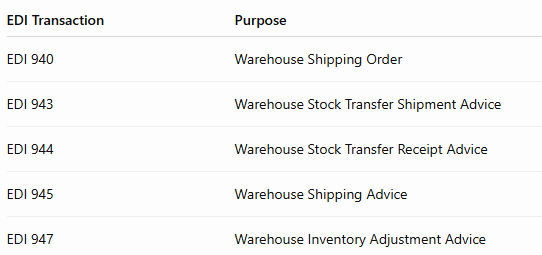
While EDI 940 and 945 support warehouse shipping activities, and EDI 943 and 944 communicate stock transfers, EDI 947 focuses on reporting inventory adjustments.
Together, these transactions help businesses automate important warehouse operations and maintain better inventory control.
How SBSA Technology Helps Automate EDI 947
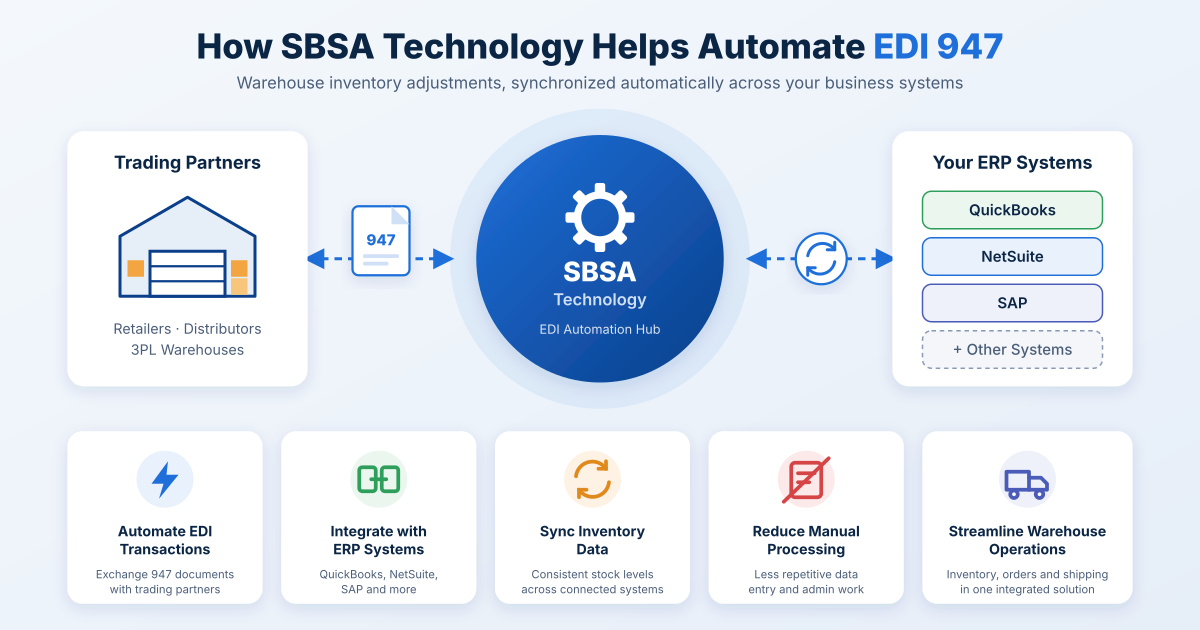 Managing warehouse inventory adjustments manually can create unnecessary delays and inconsistencies between business systems. SBSA Technology helps suppliers streamline EDI processes and connect their retail operations with their existing business software.
With SBSA Technology, businesses can:
-
Automate EDI Transactions: Exchange standardized inventory adjustment documents with supported trading partners.
-
Integrate with ERP Systems: Connect EDI workflows with platforms such as QuickBooks, NetSuite, SAP, and other supported business systems.
-
Improve Inventory Synchronization: Maintain more consistent inventory information across connected systems.
-
Reduce Manual Processing: Minimize repetitive data entry and administrative work.
-
Streamline Warehouse Operations: Connect inventory management, order processing, shipping, and other retail workflows through one integrated solution.
Whether your business works with major retailers, distributors, or third-party warehouses, SBSA Technology can help simplify EDI communication and improve operational efficiency.
Final Thoughts
EDI 947 plays an important role in maintaining accurate warehouse inventory records. By automating inventory adjustment notifications, suppliers and warehouse operators can reduce discrepancies, improve stock visibility, and minimize manual processing.
For businesses managing multiple warehouses, suppliers, or retail trading partners, implementing an effective EDI solution can make inventory management more reliable and efficient.
Looking to automate your warehouse inventory and EDI processes? Contact SBSA Technology to learn how our EDI automation and retail operations solutions can help simplify your business workflows.
- Book a demo: sbsatech.com/consultancy
- Talk to the team: sbsatech.com/contact
- Explore the platform: sbsatech.com
- More insights: sbsatech.com/blog