
Managing retail purchase orders requires more than simply receiving and acknowledging orders. Suppliers must monitor inventory, fulfillment progress, and shipment schedules to ensure deliveries meet retailer expectations.
EDI 870 (Order Status Report) helps retail vendors communicate purchase order updates electronically, giving retailers better visibility into order progress, potential delays, and expected shipment dates.
What Is EDI 870?
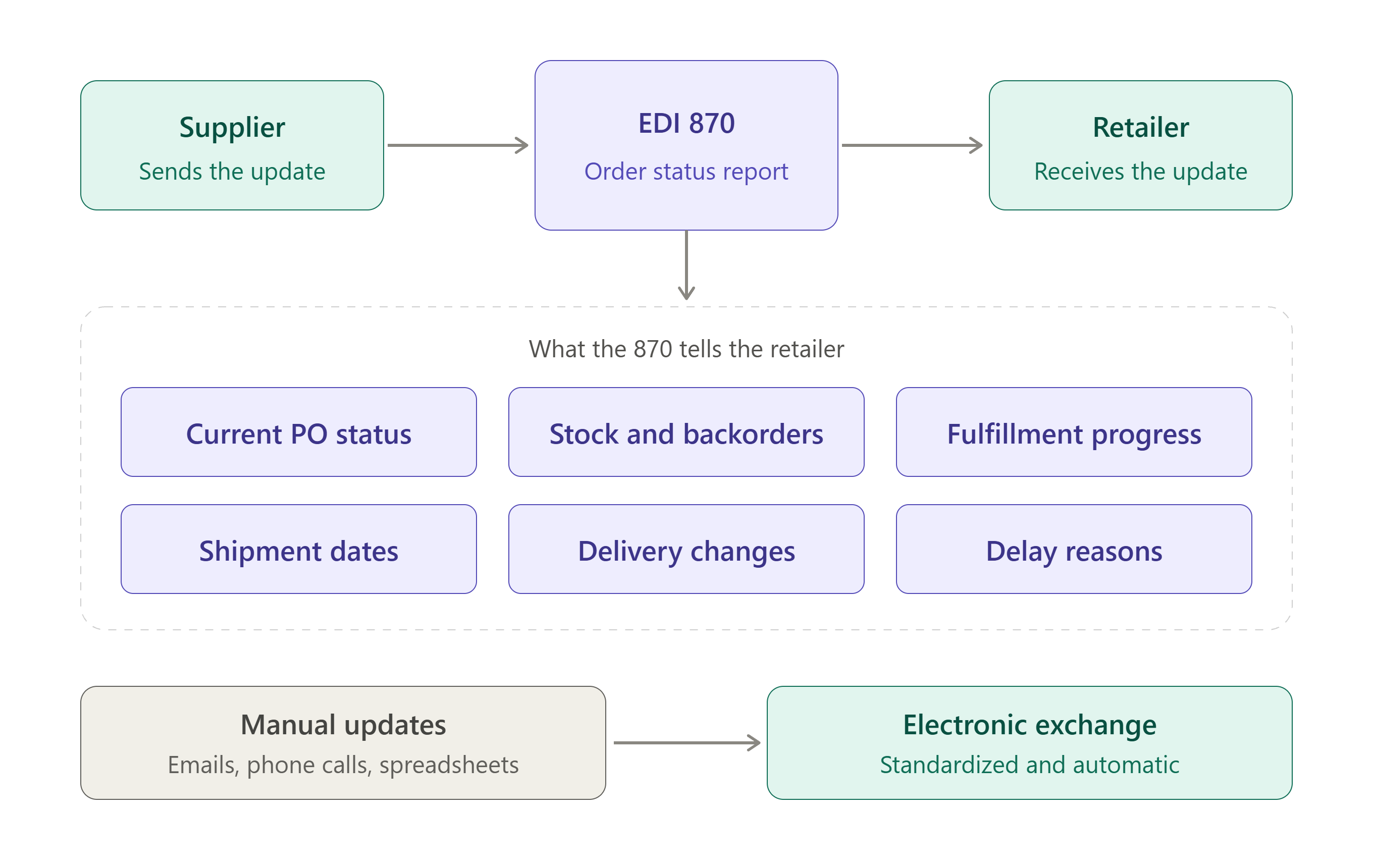
EDI 870 is an electronic transaction used by suppliers to communicate the status of purchase orders to their retail partners.
It allows vendors to provide updates about:
-
Current purchase order status
-
Product availability and backorders
-
Order fulfillment progress
-
Expected or revised shipment dates
-
Delivery schedule changes
-
Reasons for order delays
Instead of relying on emails, phone calls, or spreadsheets, suppliers can exchange order status information electronically.
How Does EDI 870 Work?
EDI 870 works alongside other retail EDI transactions to improve order visibility.
A typical workflow includes:
-
EDI 850: The retailer sends a purchase order to the supplier.
-
EDI 855: The supplier acknowledges the purchase order.
-
EDI 870: The supplier provides updates about order status, fulfillment progress, or delays.
-
EDI 856: The supplier sends shipment information through an Advance Ship Notice.
-
EDI 810: The supplier sends an electronic invoice.
This process helps retailers stay informed while suppliers maintain better control over their fulfillment operations.
EDI 870 vs. Other Common EDI Transactions
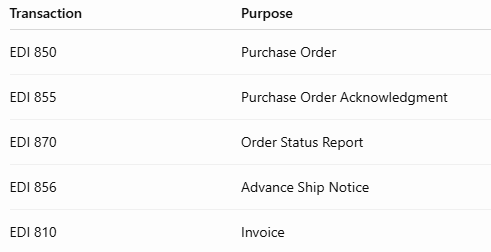
While EDI 855 confirms or responds to an order, EDI 870 provides additional order status updates throughout the fulfillment process.
Benefits of EDI 870 for Retail Vendors
Using EDI 870 can help suppliers improve their retail operations through:
-
Better Order Visibility: Monitor purchase order progress and identify potential issues.
-
Faster Communication: Send order updates electronically instead of relying on manual follow-ups.
-
Improved Fulfillment Planning: Coordinate inventory, warehouse operations, and shipment schedules.
-
Reduced Manual Work: Minimize spreadsheet tracking and repetitive data entry.
-
Fewer Delivery Delays: Communicate potential problems earlier and help retailers adjust their plans.
Without proper order status communication, suppliers risk missing important updates that can affect retailer relationships and delivery performance.
How SBSA Technology Can Help
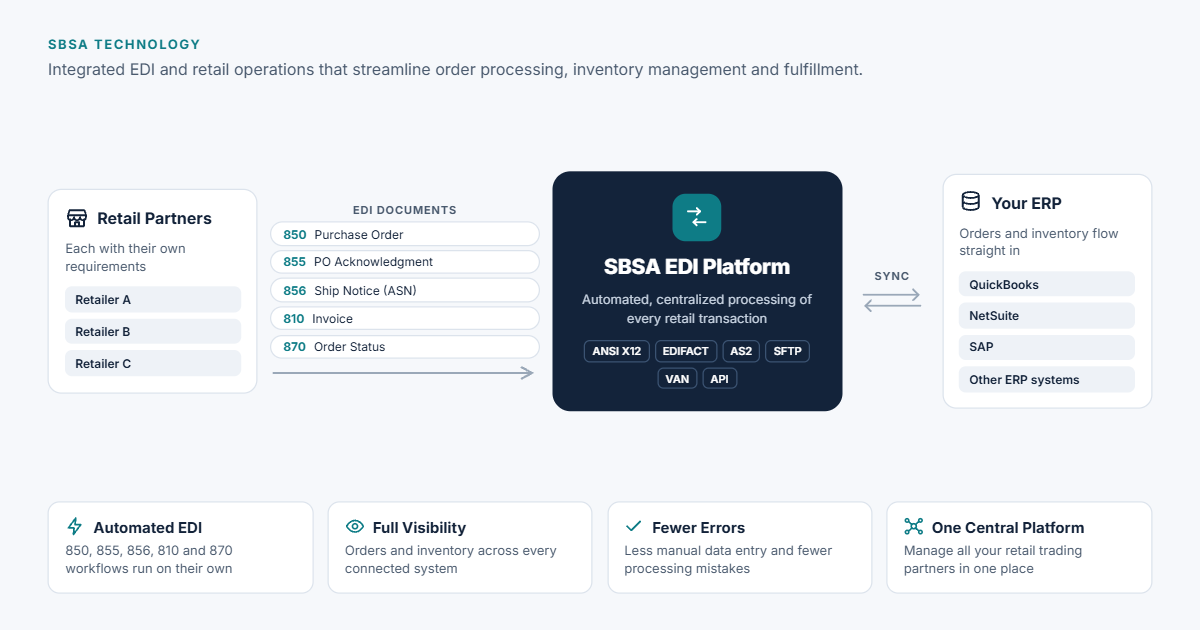
Managing multiple EDI transactions and retailer requirements can become complicated without automation.
SBSA Technology provides integrated EDI and retail operations solutions that help suppliers streamline order processing, inventory management, and fulfillment workflows.
With SBSA Technology, businesses can:
-
Automate retail EDI transactions, including 850, 855, 856, 810, and supported 870 workflows.
-
Integrate EDI operations with QuickBooks, NetSuite, SAP, and other ERP systems.
-
Improve order and inventory visibility across connected systems.
-
Reduce manual data entry and processing errors.
-
Manage multiple retail trading partners through a centralized platform.
SBSA Technology supports ANSI X12, EDIFACT, AS2, SFTP, VAN, and API connectivity to help businesses simplify their EDI operations.
Final Thoughts
EDI 870 helps retail vendors keep trading partners informed about purchase order progress, fulfillment updates, and potential delivery delays.
By automating order status communication, suppliers can improve visibility, coordinate shipments more effectively, and build stronger relationships with retailers.
Looking to automate your retail EDI operations?
Visit SBSA Technology to discover how our solutions can help simplify EDI processing and streamline your entire retail vendor operation.
- Book a demo: sbsatech.com/consultancy
- Talk to the team: sbsatech.com/contact
- Explore the platform: sbsatech.com
- More insights: sbsatech.com/blog