
Managing delivery schedules is essential for retail vendors and suppliers. Retailers frequently update shipping requirements, product quantities, and delivery dates, making it important for suppliers to keep their inventory and warehouse operations synchronized.
This is where EDI 862 (Shipping Schedule) helps. It allows buyers to electronically communicate detailed shipping requirements, helping suppliers prepare shipments, coordinate deliveries, and reduce fulfillment errors.
What Is EDI 862?
EDI 862 is an ANSI X12 transaction used by buyers to communicate detailed shipping schedules to suppliers.
It provides information about products, required quantities, shipment dates, and delivery locations. This helps suppliers understand what needs to be shipped and when it should be ready.
By automating these updates, businesses can reduce manual communication and improve coordination between purchasing, inventory, and warehouse teams.
How Does EDI 862 Work?
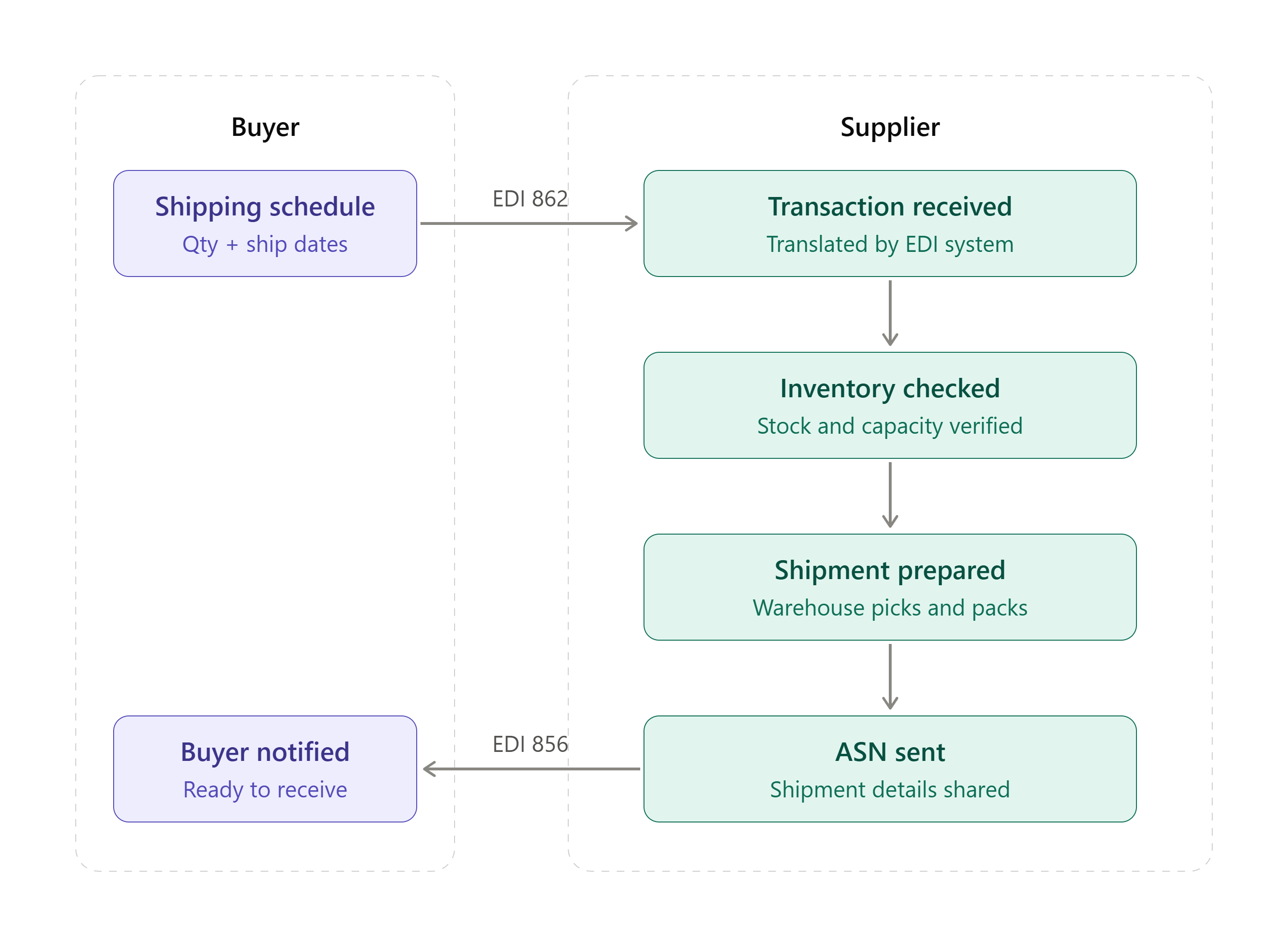
The typical EDI 862 process follows these steps:
-
Shipping Schedule Sent: The buyer sends an EDI 862 containing product quantities and requested shipping dates.
-
Transaction Received: The supplier's EDI system receives and translates the document.
-
Inventory Checked: The supplier verifies product availability and fulfillment capacity.
-
Shipment Prepared: Warehouse teams prepare the required products based on the schedule.
-
ASN Sent: Once shipped, the supplier sends an EDI 856 to notify the buyer of shipment details.
This automated workflow helps suppliers respond to schedule changes and maintain accurate shipping information.
EDI 862 vs. EDI 830: What's the Difference?
Both transactions communicate supply requirements, but they serve different purposes.

For example, an EDI 830 may communicate expected product demand for upcoming weeks, while an EDI 862 provides updated shipping quantities and dates.
Common EDI 862 Challenges
Without proper automation, suppliers may experience:
-
Missed Schedule Updates: Updated shipping requirements may go unnoticed.
-
Inventory Mismatches: Stock records may not reflect current shipment requirements.
-
Incorrect Quantities: Warehouse teams may prepare the wrong number of products.
-
Shipping Delays: Poor coordination can affect delivery schedules.
-
Retailer Compliance Issues: Incorrect shipments and missed delivery requirements can result in chargebacks.
Automating EDI processes helps reduce these risks and improve fulfillment accuracy.
Best Practices for Managing EDI 862
Retail vendors can improve their shipping operations by following these practices:
-
Automate incoming EDI 862 transactions.
-
Synchronize shipping schedules with inventory and ERP systems.
-
Monitor updated shipping requirements.
-
Coordinate warehouse operations with delivery schedules.
-
Validate shipment quantities before sending ASNs.
-
Monitor EDI errors and transaction acknowledgments.
These practices help suppliers maintain accurate shipping information and meet retailer requirements.
How SBSA Technology Can Help

SBSA Technology provides a complete retail vendor operating system that helps businesses automate EDI transactions and fulfillment operations.
Our platform helps manufacturers, distributors, and suppliers:
-
Automate EDI transactions, including 850, 830, 862, 856, and 810.
-
Integrate EDI with ERP, inventory, and warehouse systems.
-
Improve order and shipment accuracy.
-
Monitor EDI transactions and identify processing errors.
-
Streamline fulfillment and reduce manual data entry.
-
Improve retailer compliance and reduce avoidable chargebacks.
Whether you manage a few retail accounts or multiple trading partners, SBSA Technology helps simplify your EDI operations and keep your business connected.
Final Thoughts
EDI 862 helps suppliers manage changing shipping schedules, coordinate warehouse activities, and meet retailer delivery requirements. When integrated with inventory and fulfillment systems, it improves shipment visibility and reduces manual errors.
With SBSA Technology, businesses can automate their EDI workflows, improve shipping accuracy, and manage retail operations more efficiently.
Looking to simplify your EDI operations? Visit www.sbsatech.com to learn how SBSA Technology can help automate your retail vendor operations.
- Book a demo: sbsatech.com/consultancy
- Talk to the team: sbsatech.com/contact
- Explore the platform: sbsatech.com
- More insights: sbsatech.com/blog