
Retail purchase orders can change after they are first submitted. A retailer may adjust quantities, update delivery dates, or modify other order details. If these changes do not reach the supplier’s order management, inventory, and warehouse systems, the result can be incorrect shipments, fulfillment delays, and costly compliance issues.
EDI 860 (Purchase Order Change Request) helps retailers communicate changes to previously issued purchase orders electronically. When integrated with the supplier’s business systems, it helps vendors keep order information accurate throughout the fulfillment process.
What Is EDI 860?
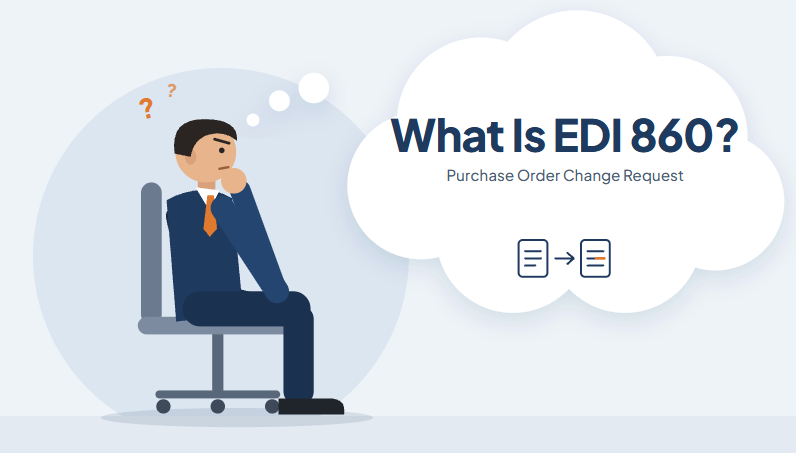
EDI 860 is an electronic data interchange transaction used by buyers to request changes to an existing purchase order. Depending on the retailer’s requirements, these changes may include product quantities, requested delivery dates, item details, or other order information.
Suppliers may use EDI 865 (Purchase Order Change Acknowledgment/Request) to communicate their response to a purchase order change, depending on the trading partner’s implementation.
Processing these transactions correctly helps suppliers maintain consistent order information between retailers and internal systems.
What Happens When Purchase Order Changes Are Missed?
When an EDI 860 update is not processed correctly, vendors can experience several operational problems:
-
Incorrect quantities: Warehouse teams pick and ship based on outdated order information.
-
Shipment discrepancies: The Advance Ship Notice (EDI 856) may not reflect the latest accepted order details.
-
Inventory errors: Stock is reserved or allocated against outdated quantities.
-
Delivery delays: Updated shipping or delivery requirements are missed.
-
Compliance costs: Order discrepancies can contribute to retailer deductions or chargebacks, depending on the retailer’s rules.
The risk increases when teams manually update spreadsheets or maintain separate order records across multiple systems.
How Retail Vendors Can Prevent Fulfillment Errors
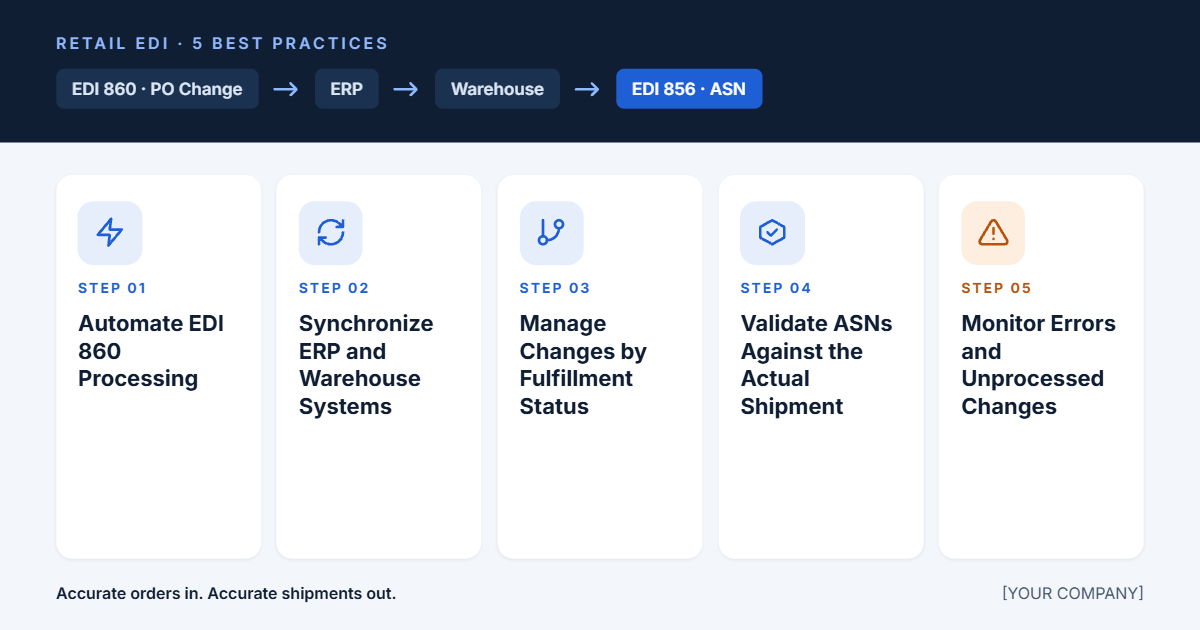
1. Automate EDI 860 Processing
Configure incoming purchase order changes to flow automatically into the appropriate order management or ERP system. Validate key information, such as the purchase order number, item identifiers, quantities, and requested dates, before applying updates.
2. Synchronize ERP and Warehouse Systems
Ensure approved order changes reach the systems used by inventory planners, warehouse staff, and shipping teams. Everyone should work from consistent order information rather than separate spreadsheets or outdated records.
3. Manage Changes Based on Fulfillment Status
A purchase order change received before picking may be straightforward to apply. A change received after picking, packing, or shipment preparation may require additional review.
Establish rules to identify orders already in progress and route exceptions to the appropriate team before the change causes a shipment discrepancy.
4. Validate ASNs Against the Actual Shipment
Before sending EDI 856, verify that shipment details reflect what was actually picked, packed, and shipped. Carton counts, item quantities, and applicable shipping identifiers must match the physical shipment and the retailer’s requirements.
An ASN should not simply copy outdated purchase order data. It must accurately represent the shipment being sent.
5. Monitor Errors and Unprocessed Changes
Track rejected transactions, failed integrations, duplicate updates, and changes awaiting approval. Assign responsibility for resolving exceptions so order changes do not remain unnoticed until shipment or invoicing.
How SBSA Technology Helps
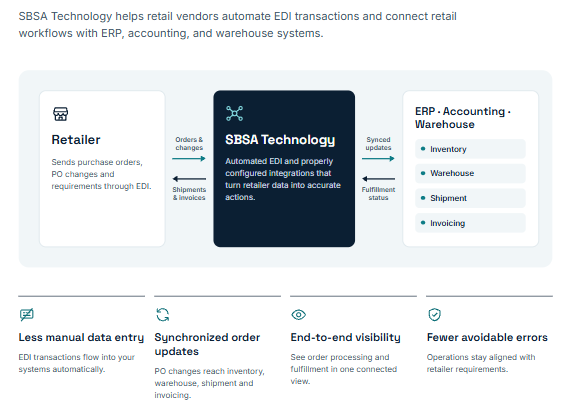
SBSA Technology helps retail vendors automate EDI transactions and connect retail workflows with ERP, accounting, and warehouse systems. With properly configured integrations, vendors can reduce manual data entry, synchronize order updates, and improve visibility across order processing and fulfillment.
By connecting purchase order changes with inventory, warehouse, shipment, and invoicing workflows, businesses can reduce avoidable errors and keep operations aligned with retailer requirements.
The goal is not simply to exchange EDI documents. It is to ensure that the information received from a retailer translates into accurate actions across the business.
Final Thoughts
EDI 860 processing is an important part of maintaining accurate retail orders. When purchase order changes are missed or handled manually, vendors risk shipping discrepancies, delays, inventory problems, and additional administrative work.
Automating order updates, synchronizing connected systems, and validating shipment data can help suppliers maintain more reliable fulfillment operations.
Need to improve your retail EDI workflow? Contact SBSA Technology to explore EDI automation and integration solutions designed to help your business manage orders, shipments, and retailer requirements more efficiently.
- Book a demo: sbsatech.com/consultancy
- Talk to the team: sbsatech.com/contact
- Explore the platform: sbsatech.com
- More insights: sbsatech.com/blog