
Managing payments from multiple retailers can become complicated for manufacturers, distributors, and wholesale suppliers. Accounting teams often spend hours matching payments against invoices, investigating deductions, and updating financial records.
EDI 820 Remittance Advice helps simplify this process by electronically communicating payment details between trading partners. It allows suppliers to identify which invoices are being paid, understand payment adjustments, and streamline accounts receivable operations.
In this guide, we'll explain how EDI 820 works and how automation can help retail suppliers improve payment reconciliation.
What Is EDI 820 Remittance Advice?
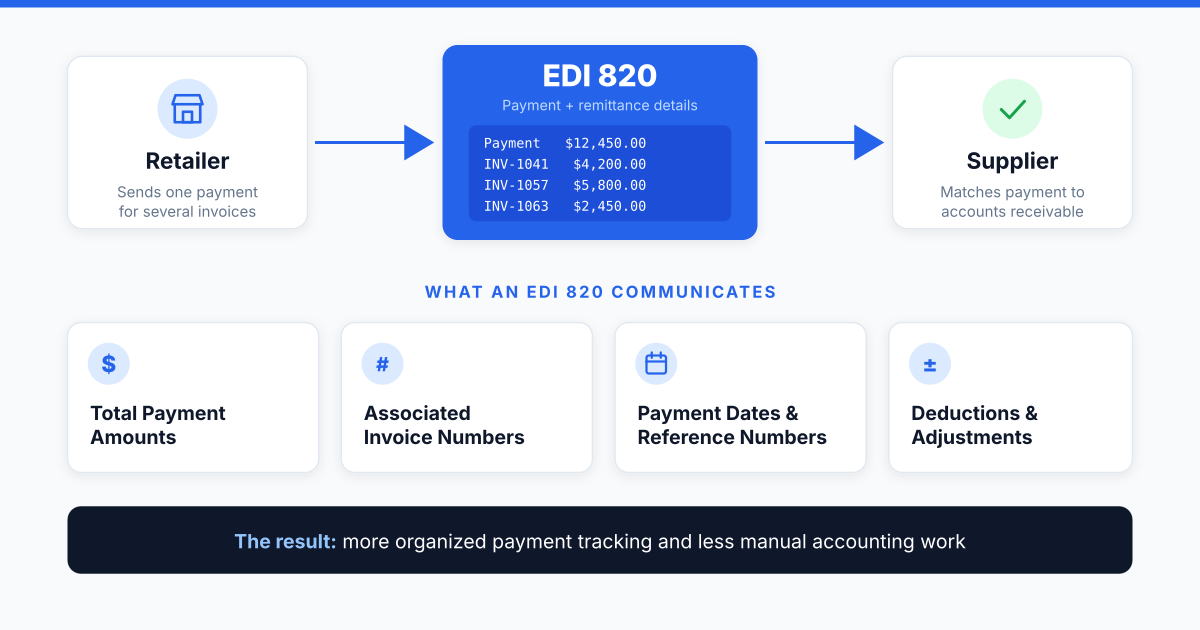 EDI 820, also known as the Payment Order/Remittance Advice transaction set, is an ANSI ASC X12 document used to exchange payment instructions and remittance information between businesses.
It allows retailers to communicate payment details to suppliers, including:
-
Total payment amounts.
-
Invoice numbers associated with payments.
-
Payment dates and reference numbers.
-
Applicable deductions or adjustments.
For example, a retailer might issue one payment covering several outstanding invoices. Instead of manually identifying which invoices were included, the supplier can use EDI 820 information to match the payment against its accounts receivable records.
This makes payment tracking more organized and reduces manual accounting work.
How Does EDI 820 Work?
EDI 820 typically comes into play after a supplier has fulfilled an order and submitted an invoice to a retailer.
Here's a simplified workflow:
-
Supplier Sends an Invoice: The supplier sends an EDI 810 Invoice to the retailer.
-
Retailer Processes the Invoice: The retailer validates the invoice against purchase orders, shipment records, and agreed pricing.
-
Payment Is Processed: The retailer schedules payment based on the agreed payment terms.
-
EDI 820 Is Sent: The retailer sends remittance information identifying the payment and related invoices.
-
Supplier Reconciles Payment: The supplier's accounting system uses the information to match payments against outstanding invoices.
When integrated with an ERP or accounting platform, this process can reduce manual reconciliation and improve payment visibility.
Important EDI 820 Segments
An EDI 820 transaction contains several segments that communicate payment and remittance information.
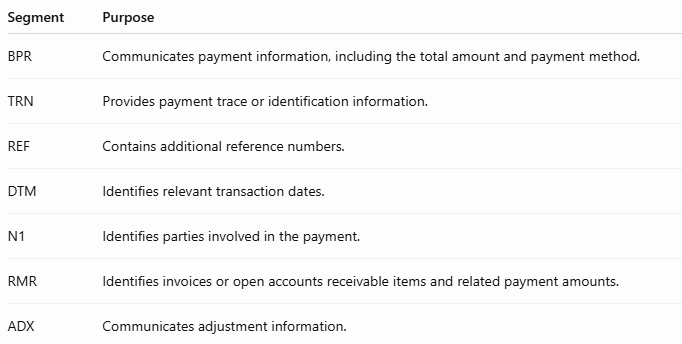
These segments work together to help suppliers identify payments, match invoices, and investigate discrepancies.
The exact segments and requirements depend on the retailer's EDI implementation guide.
EDI 820 Example: Payment Reconciliation
Consider a supplier with three outstanding invoices from a retailer.
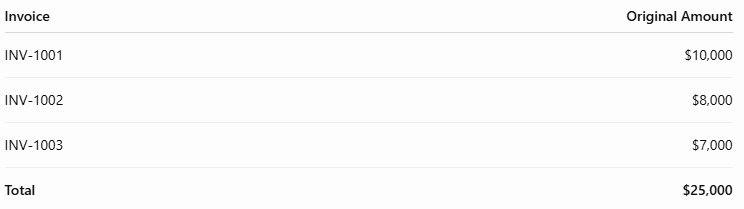
The retailer sends a payment of $24,500 after applying a $500 deduction to the second invoice.
The remittance information could look like this:
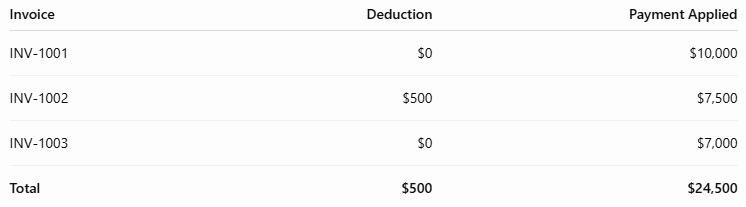
With EDI 820, the supplier can identify the invoices covered by the payment and determine where the deduction occurred.
The accounting team can then investigate the $500 adjustment instead of manually reviewing every invoice.
EDI 820 vs. EDI 810 vs. EDI 812
These three EDI transactions support different parts of the retail financial process.
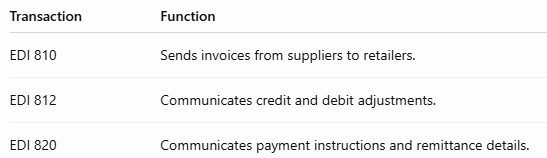
Together, they help suppliers manage invoicing, payment adjustments, and accounts receivable.
EDI 820 does not replace EDI 812. Each transaction serves a separate purpose.
Benefits of Automating EDI 820 Processing
Automating EDI 820 transactions can help retail suppliers improve their accounting operations.
Faster Payment Reconciliation: Automatically match remittance information against outstanding invoices.
Reduced Manual Data Entry: Minimize repetitive work and reduce the risk of accounting errors.
Better Deduction Tracking: Identify payment differences and flag adjustments for further investigation.
Improved Financial Visibility: Maintain more accurate accounts receivable records and payment histories.
Easier Multi-Retailer Management: Process payment information from multiple trading partners through connected systems.
These benefits become particularly valuable for suppliers handling large volumes of retailer transactions.
How SBSA Technology Helps Automate Retail EDI Operations
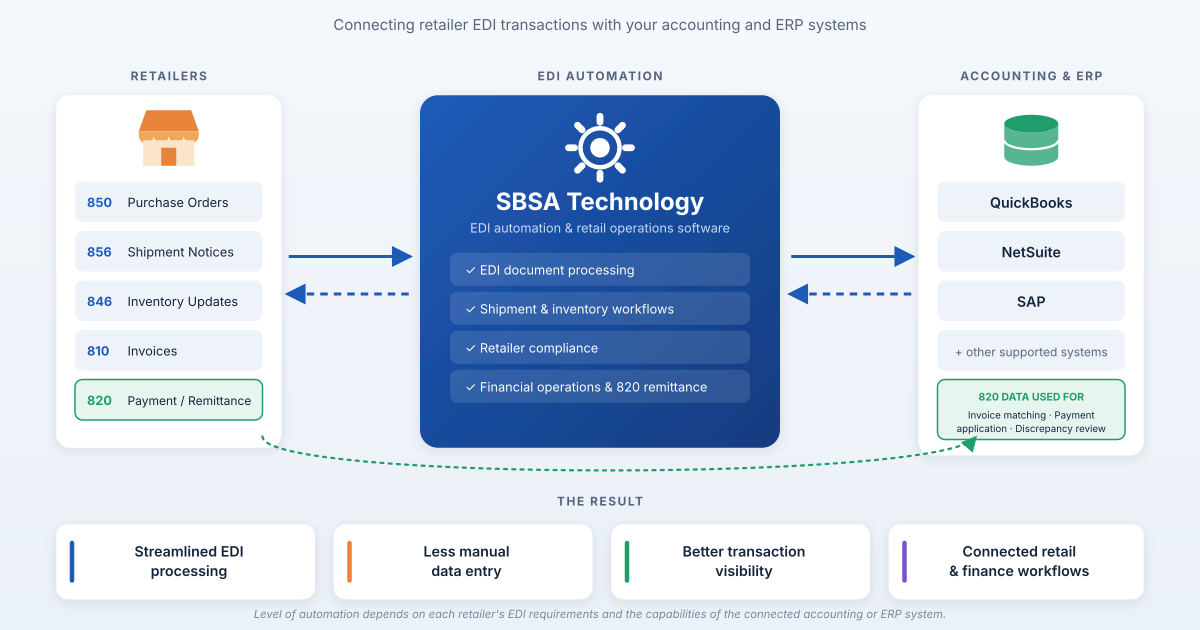 Managing retail EDI transactions involves more than sending purchase orders and invoices. Businesses also need efficient workflows for shipment processing, inventory synchronization, retailer compliance, and financial operations.
SBSA Technology provides EDI automation and retail operations software that helps suppliers connect their business processes and existing systems.
With the right integrations, businesses can streamline EDI document processing, reduce manual data entry, improve transaction visibility, and connect retail workflows with accounting and ERP platforms such as QuickBooks, NetSuite, SAP, and other supported systems.
For EDI 820 workflows, integration can help make payment and remittance information available to accounting systems for invoice matching, payment application, and discrepancy review.
The level of automation depends on the retailer's EDI requirements and the capabilities of the connected accounting or ERP system.
Conclusion
EDI 820 Remittance Advice helps retail suppliers understand how retailers process payments and apply them to outstanding invoices.
By automating the exchange and processing of payment information, businesses can reduce manual reconciliation, track deductions more efficiently, and maintain more accurate financial records.
For manufacturers, distributors, and retail vendors managing multiple trading partners, integrating EDI with accounting and ERP systems can make financial operations more efficient.
Looking to simplify your retail EDI operations?
SBSA Technology helps businesses automate retail EDI workflows and connect them with their existing business systems.
- Book a demo: sbsatech.com/consultancy
- Talk to the team: sbsatech.com/contact
- Explore the platform: sbsatech.com
- More insights: sbsatech.com/blog