
Managing freight transportation requires accurate carrier routing information, service areas, transit times, and loading instructions. For suppliers shipping products to retailers and distribution centers, having updated carrier information helps ensure shipments are planned efficiently.
EDI 217 (Motor Carrier Loading and Route Guide) is an electronic transaction used by motor carriers to communicate routing guides, terminal information, service areas, transit times, and loading instructions to shippers.
What Is EDI 217?
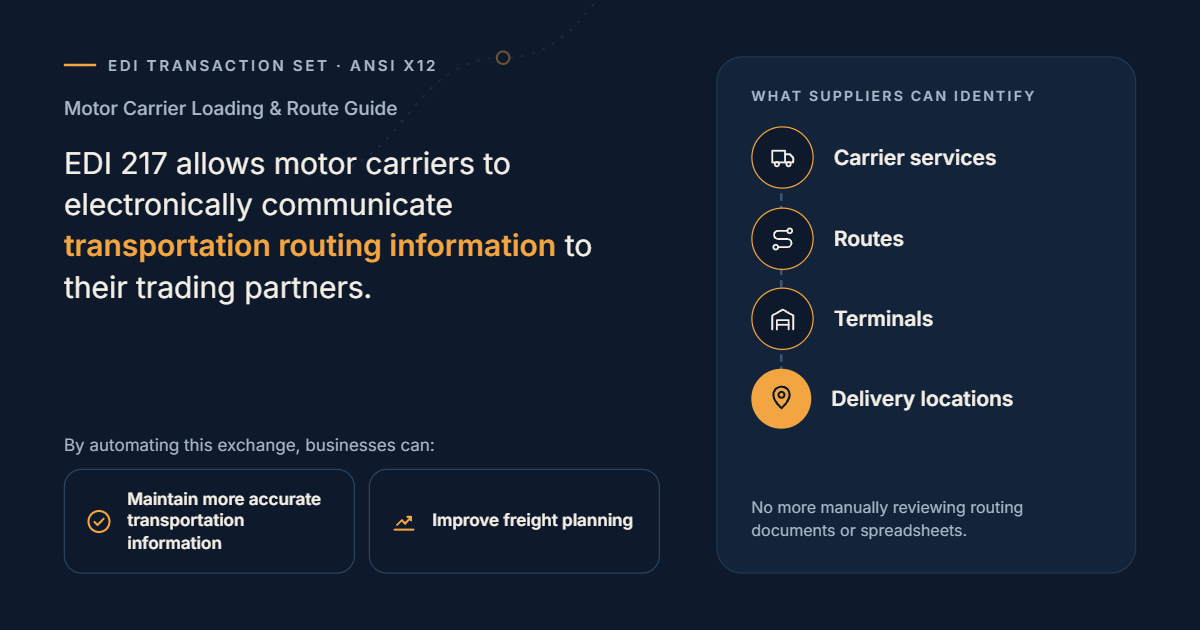 EDI 217 allows motor carriers to electronically communicate transportation routing information to their trading partners. It helps suppliers identify available carrier services, routes, terminals, and delivery locations without manually reviewing routing documents or spreadsheets.
By automating this exchange, businesses can maintain more accurate transportation information and improve freight planning.
What Information Does EDI 217 Contain?
An EDI 217 document may include:
-
Carrier identification and terminal information
-
Service areas and destination locations
-
Routing instructions and transportation services
-
Estimated transit times
-
Loading and freight handling instructions
The specific information depends on the carrier's implementation requirements.
Benefits of EDI 217 for Suppliers
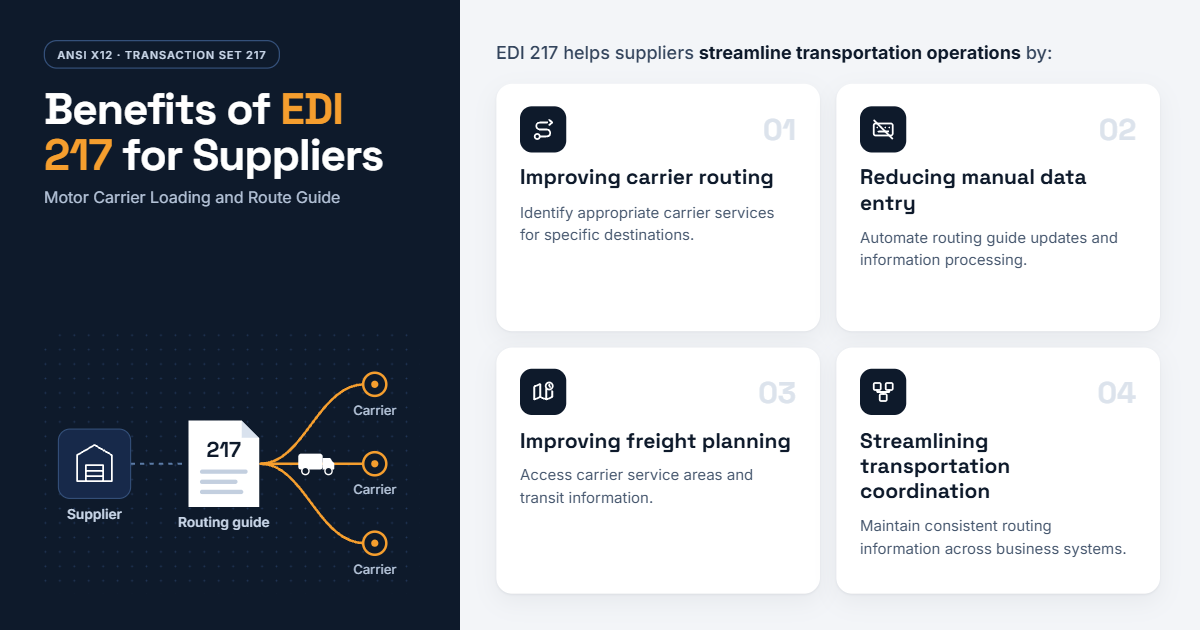 EDI 217 helps suppliers streamline transportation operations by:
-
Improving carrier routing: Identify appropriate carrier services for specific destinations.
-
Reducing manual data entry: Automate routing guide updates and information processing.
-
Improving freight planning: Access carrier service areas and transit information.
-
Streamlining transportation coordination: Maintain consistent routing information across business systems.
EDI 217 vs. Other Motor Carrier Transactions
EDI 217 focuses on carrier routing guides and loading instructions, while other transportation transactions support different freight operations:
-
EDI 204: Motor Carrier Load Tender
-
EDI 210: Motor Carrier Freight Invoice
-
EDI 211: Motor Carrier Bill of Lading
-
EDI 214: Transportation Carrier Shipment Status
-
EDI 215: Motor Carrier Pickup Manifest
-
EDI 216: Motor Carrier Shipment Pickup Notification
How SBSA Technology Helps Automate EDI 217
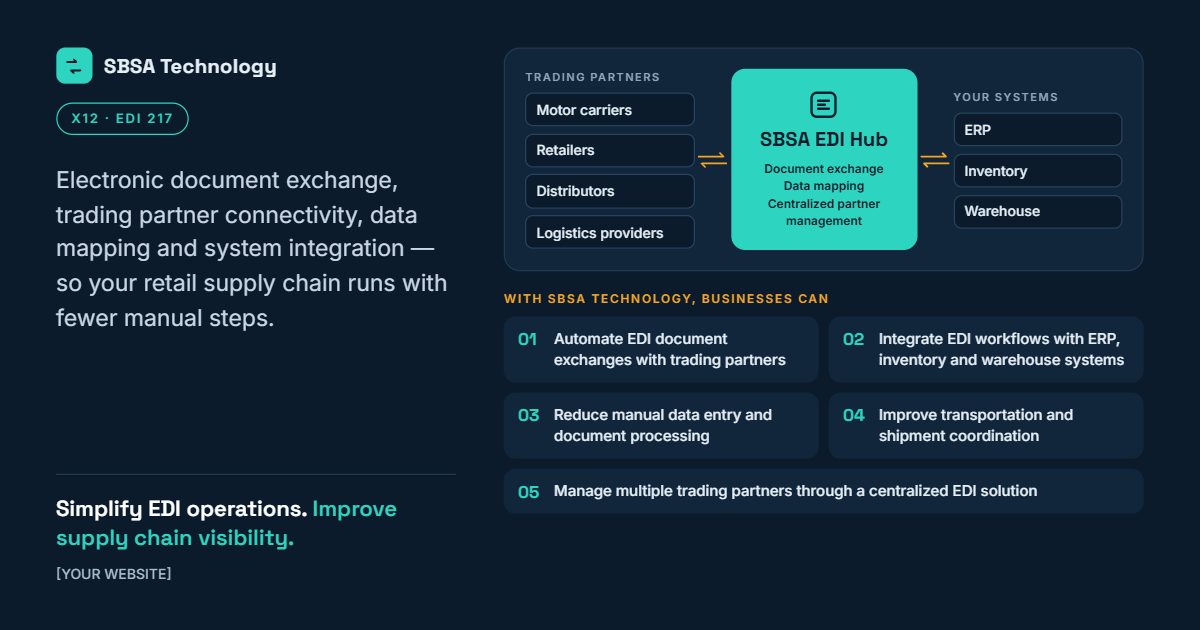 SBSA Technology helps businesses automate EDI transactions and streamline retail supply chain operations.
Our EDI solutions support electronic document exchange, trading partner connectivity, data mapping, and integration with business systems to reduce manual processes and improve operational efficiency.
With SBSA Technology, businesses can:
-
Automate EDI document exchanges with trading partners
-
Integrate EDI workflows with ERP, inventory, and warehouse systems
-
Reduce manual data entry and document processing
-
Improve transportation and shipment coordination
-
Manage multiple trading partners through a centralized EDI solution
Whether your business works with motor carriers, retailers, distributors, or logistics providers, SBSA Technology can help simplify EDI operations and improve supply chain visibility.
Final Thoughts
EDI 217 helps businesses automate the exchange of motor carrier routing guides, service areas, terminal information, and loading instructions. By reducing manual routing guide management, suppliers can improve freight planning and transportation coordination.
SBSA Technology helps businesses simplify EDI communication and automate supply chain operations.
- Book a demo: sbsatech.com/consultancy
- Talk to the team: sbsatech.com/contact
- Explore the platform: sbsatech.com
- More insights: sbsatech.com/blog