
Managing multiple shipments scheduled for carrier pickup can become complicated, especially when suppliers handle large order volumes, multiple purchase orders, and different delivery destinations. Without an organized pickup manifest, shipping teams may struggle to coordinate shipments, verify package quantities, and provide accurate information to carriers.
EDI 215 (Motor Carrier Pickup Manifest) is an ANSI X12 transaction set that allows shippers to electronically provide motor carriers with a consolidated manifest of shipments tendered to them. It helps organize shipment information, identify packages, and simplify communication between suppliers and transportation providers.
What Is EDI 215?
EDI 215 is used by suppliers, shippers, and other logistics parties to transmit a pickup manifest containing information about multiple shipments assigned to a motor carrier.
Instead of preparing separate paper documents or manually compiling shipment details, businesses can electronically share important information, including shipment references, destination details, package information, and pickup-related instructions.
For suppliers shipping multiple orders through the same carrier, EDI 215 helps organize shipment documentation and makes it easier for carriers to identify the shipments they are expected to collect.
How Does EDI 215 Work?
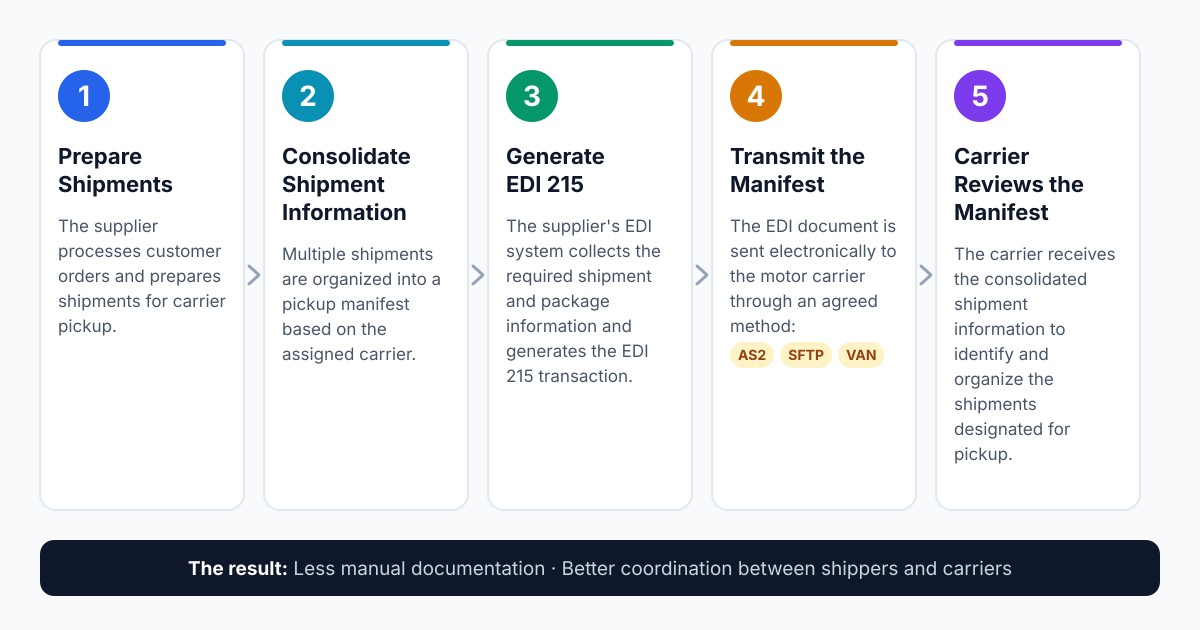 The EDI 215 process typically involves the following steps:
-
Prepare Shipments: The supplier processes customer orders and prepares shipments for carrier pickup.
-
Consolidate Shipment Information: Multiple shipments are organized into a pickup manifest based on the assigned carrier.
-
Generate EDI 215: The supplier's EDI system collects the required shipment and package information and generates the EDI 215 transaction.
-
Transmit the Manifest: The EDI document is electronically sent to the motor carrier through an agreed communication method, such as AS2, SFTP, or a VAN.
-
Carrier Reviews the Manifest: The carrier receives the consolidated shipment information to help identify and organize the shipments designated for pickup.
This process reduces manual documentation and improves coordination between shipping departments and transportation providers.
What Information Is Included in an EDI 215 Document?
Depending on the carrier's EDI requirements, an EDI 215 transaction may contain:
-
Carrier Information: Carrier identification and relevant transportation details.
-
Shipment References: Shipment numbers, purchase order numbers, and other identifying references.
-
Pickup Information: Relevant pickup dates, times, and shipping instructions.
-
Ship-to Information: Consignee names, addresses, and destination details.
-
Package Details: Carton quantities, package identifiers, and shipment measurements.
-
Weight Information: Shipment and package weights.
-
Transportation Details: Additional information required by the carrier for shipment handling.
The exact data requirements depend on the trading partners' implementation guidelines and supported X12 version.
Benefits of EDI 215 for Suppliers
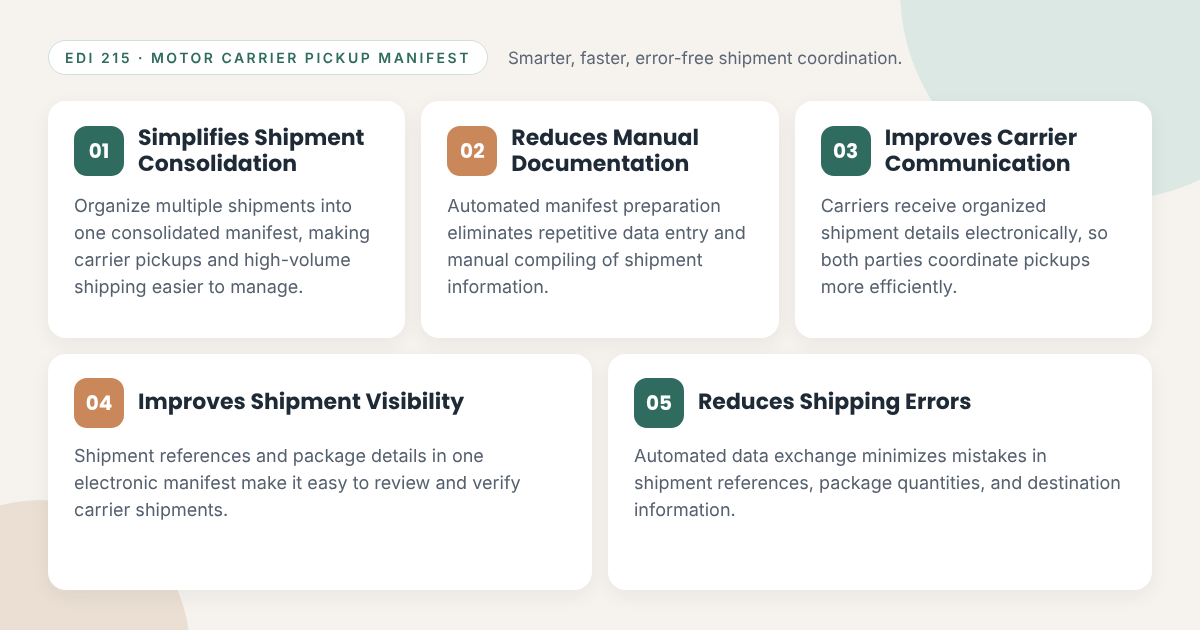 1. Simplifies Shipment Consolidation
Suppliers can organize multiple shipments into a consolidated manifest, making it easier to coordinate carrier pickups and manage high-volume shipping operations.
2. Reduces Manual Documentation
Automating pickup manifest preparation eliminates repetitive data entry and reduces the need to manually compile shipment information.
3. Improves Carrier Communication
Electronic transmission gives carriers access to organized shipment details, helping both parties coordinate pickup activities more efficiently.
4. Improves Shipment Visibility
Having shipment references and package information in an electronic manifest makes it easier for shipping teams to review and verify shipments assigned to a carrier.
5. Reduces Shipping Errors
Automated data exchange helps minimize mistakes caused by manually entering shipment references, package quantities, and destination information.
EDI 215 vs. Other Transportation EDI Transactions
EDI 215 works alongside other transportation-related EDI documents, but each transaction serves a different purpose.
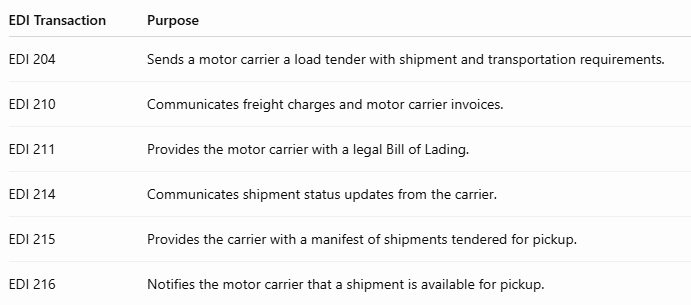
These transactions can work together to support different stages of transportation and freight management.
How SBSA Technology Helps Automate EDI 215
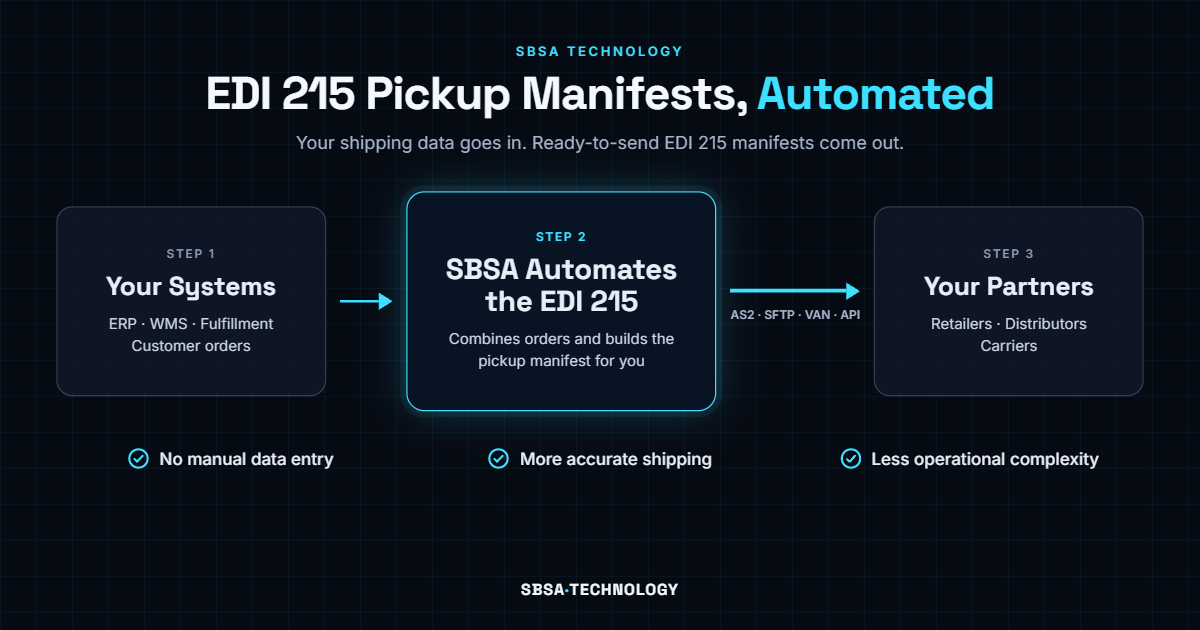 SBSA Technology helps suppliers simplify transportation documentation and shipping operations through integrated EDI automation.
Our EDI solutions can help businesses:
-
Automate the generation and exchange of EDI 215 pickup manifests.
-
Integrate shipment information with ERP, WMS, and fulfillment systems.
-
Consolidate shipment data from multiple customer orders.
-
Exchange transportation documents through AS2, SFTP, VAN, or API connections.
-
Reduce manual data entry and improve shipping accuracy.
-
Connect with major retailers, distributors, and transportation trading partners.
Whether you are managing multiple retail shipments or coordinating high-volume carrier pickups, SBSA Technology helps streamline your EDI workflows and reduce operational complexity.
Final Thoughts
EDI 215 plays an important role in organizing shipment information and communicating consolidated pickup manifests to motor carriers. By automating the exchange of shipment and package details, suppliers can reduce manual documentation, improve carrier coordination, and make their shipping operations more efficient.
With SBSA Technology, businesses can automate their transportation EDI processes and connect shipment workflows with their existing business systems.
- Book a demo: sbsatech.com/consultancy
- Talk to the team: sbsatech.com/contact
- Explore the platform: sbsatech.com
- More insights: sbsatech.com/blog