
Tracking shipments and keeping retailers informed about delivery progress are important parts of supply chain management. Suppliers need accurate shipment updates to avoid delays, maintain retailer compliance, and ensure orders arrive on schedule.
EDI 214 (Transportation Carrier Shipment Status Message) is an electronic transaction used by transportation carriers to send shipment status updates to suppliers, shippers, and retailers. It helps businesses monitor deliveries without relying on manual tracking or constant communication with carriers.
What Is EDI 214?
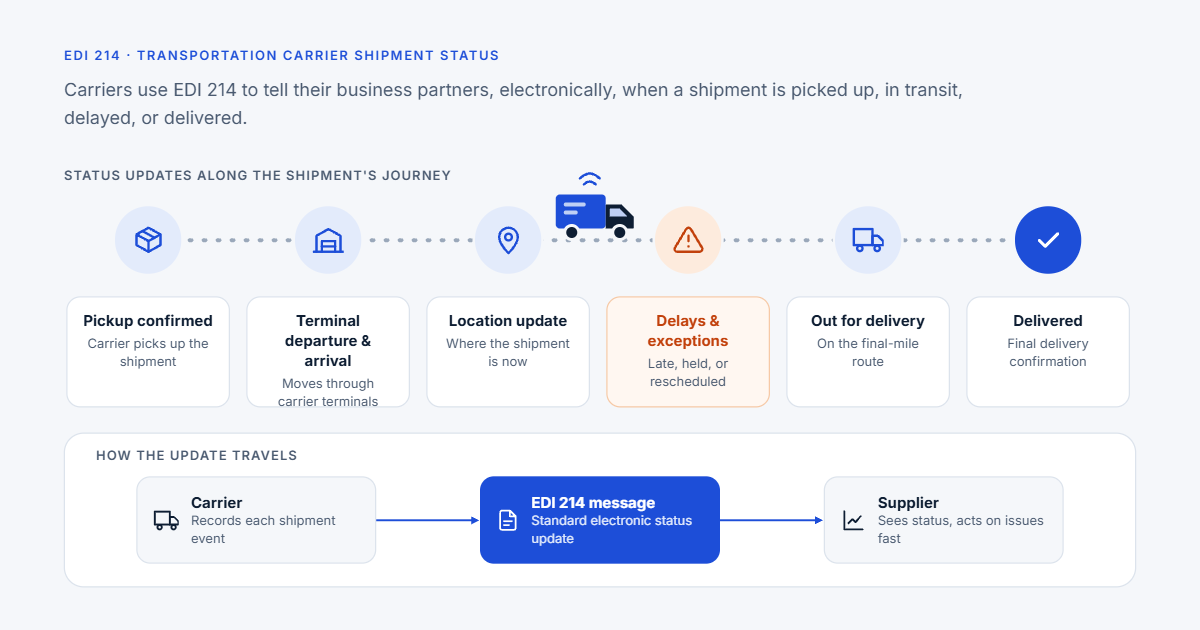 EDI 214 is used to communicate shipment progress and transportation events electronically. It allows carriers to notify business partners when shipments are picked up, in transit, delayed, or delivered.
Common EDI 214 updates include:
-
Shipment pickup confirmation
-
Departure and arrival at transportation terminals
-
Shipment location updates
-
Delivery delays and exceptions
-
Out-for-delivery notifications
-
Final delivery confirmation
These updates provide suppliers with better visibility into their shipments and help them respond quickly to transportation issues.
How Does EDI 214 Work?
The EDI 214 process typically follows these steps:
-
Shipment Preparation: The supplier prepares an order and arranges transportation with a carrier.
-
Carrier Pickup: The carrier collects the shipment and records the pickup information.
-
Status Updates: The carrier sends EDI 214 messages as the shipment moves through its transportation network.
-
Shipment Monitoring: The supplier's EDI system receives and processes the updates.
-
Delivery Confirmation: The carrier sends a final status update once the shipment reaches its destination.
Benefits of EDI 214 for Suppliers
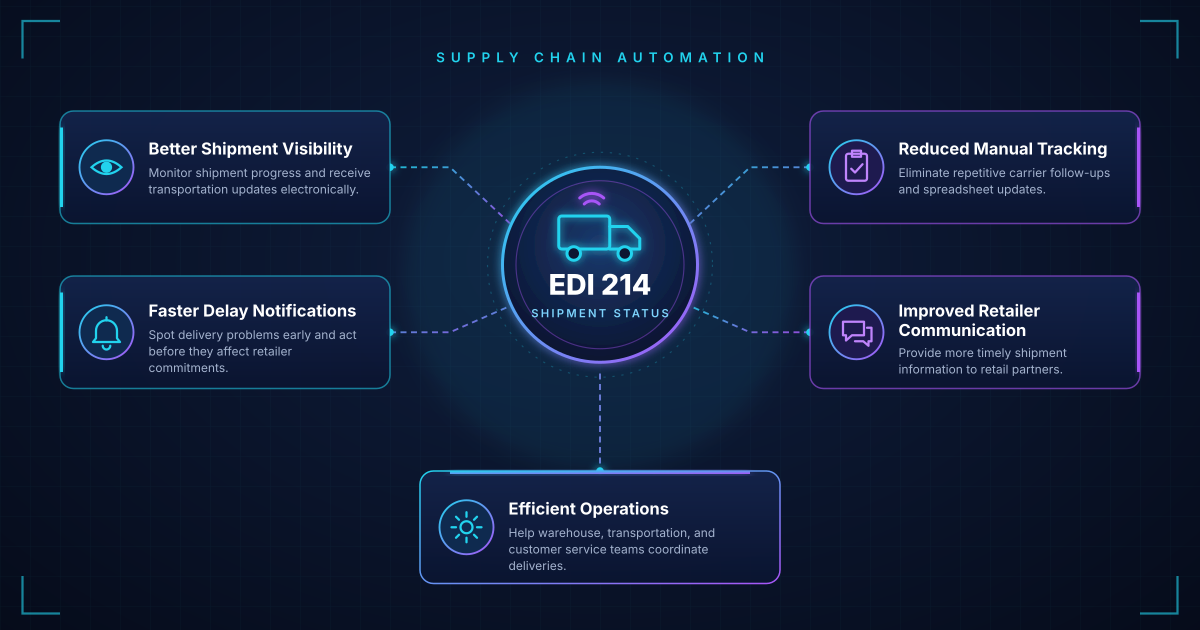 Using EDI 214 automation provides several advantages:
-
Better Shipment Visibility: Monitor shipment progress and receive transportation updates electronically.
-
Faster Delay Notifications: Identify delivery problems earlier and take action before they affect retailer commitments.
-
Reduced Manual Tracking: Eliminate repetitive carrier follow-ups and spreadsheet updates.
-
Improved Retailer Communication: Provide more timely shipment information to retail partners.
-
Efficient Operations: Help warehouse, transportation, and customer service teams coordinate deliveries.
EDI 214 vs. Other EDI Transactions
EDI 214 works alongside other transportation and fulfillment transactions.
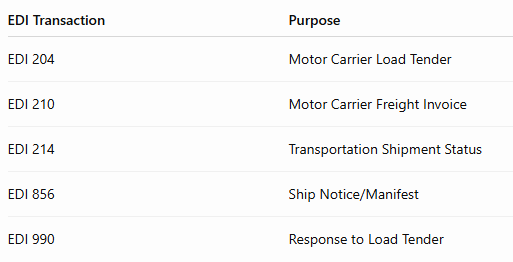
While EDI 856 communicates shipment contents and packaging details, EDI 214 focuses on transportation progress and delivery status.
How SBSA Technology Helps Automate EDI 214
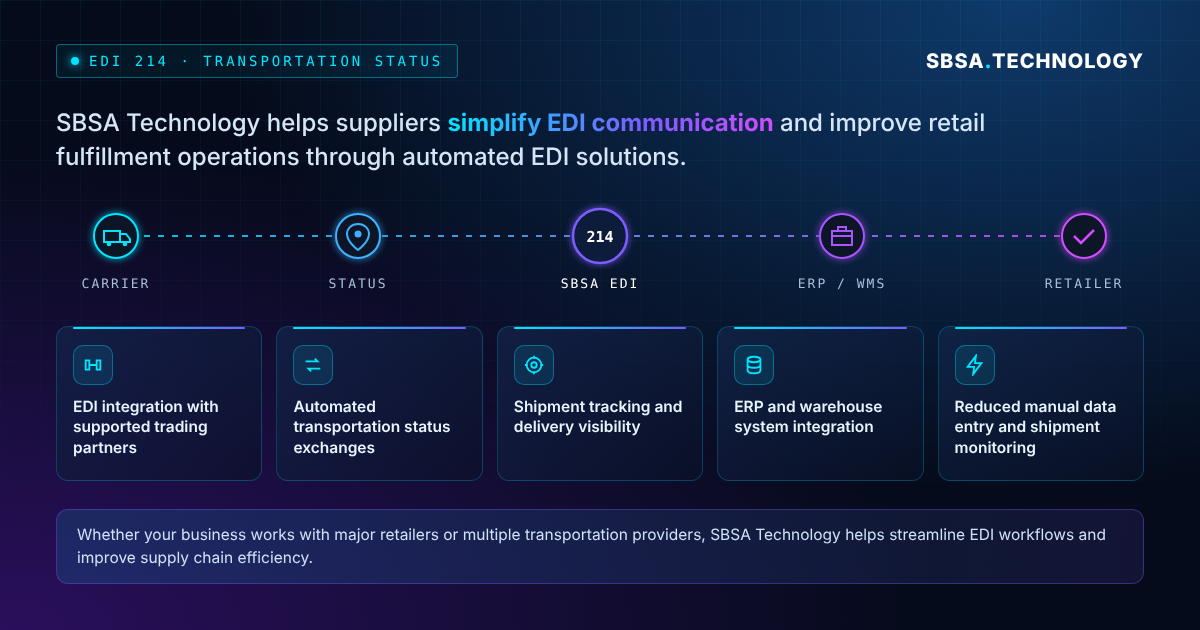 SBSA Technology helps suppliers simplify EDI communication and improve retail fulfillment operations through automated EDI solutions.
Our capabilities include:
-
EDI integration with supported trading partners.
-
Automated transportation status exchanges.
-
Shipment tracking and delivery visibility.
-
ERP and warehouse system integration.
-
Reduced manual data entry and shipment monitoring.
Whether your business works with major retailers or multiple transportation providers, SBSA Technology helps streamline EDI workflows and improve supply chain efficiency.
Final Thoughts
EDI 214 helps suppliers stay informed about shipment progress, identify delivery delays, and improve communication with carriers and retailers. Automating this transaction reduces manual tracking and provides better visibility throughout the transportation process.
Looking to automate your EDI transactions? SBSA Technology provides EDI automation and retail operations solutions to help suppliers simplify shipping processes and manage their retail operations more efficiently.
- Book a demo: sbsatech.com/consultancy
- Talk to the team: sbsatech.com/contact
- Explore the platform: sbsatech.com
- More insights: sbsatech.com/blog