
Tracking freight shipments can be time-consuming when suppliers need to contact carriers manually to check delivery updates, confirm shipment locations, or investigate delays. For businesses managing multiple shipments across different carriers, this process can create unnecessary administrative work and delays in communicating with customers.
The EDI 213 Motor Carrier Shipment Status Inquiry helps automate this process by allowing suppliers, shippers, or consignees to electronically request shipment status information from a motor carrier.
What Is EDI 213?
EDI 213 is an ANSI X12 transaction set used to request the status of a shipment from a motor carrier. It allows the sender to electronically communicate shipment identification details and request updated tracking information.
Instead of manually calling a carrier or logging into multiple tracking portals, a supplier can send an EDI 213 inquiry through an integrated EDI system.
The transaction typically identifies the shipment using references such as a Bill of Lading (BOL), purchase order number, or other shipment identifiers.
How EDI 213 Shipment Status Inquiries Work
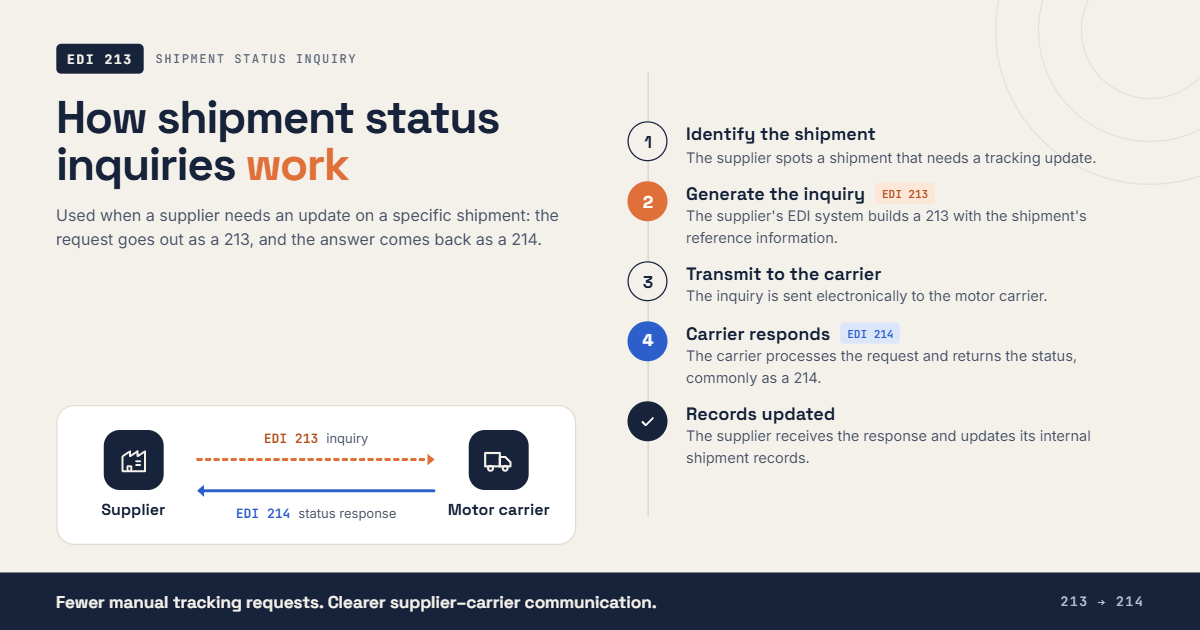 The EDI 213 transaction is typically used when a supplier needs to request an update about a specific shipment.
The process generally follows these steps:
-
A supplier identifies a shipment that requires a tracking update.
-
The supplier's EDI system generates an EDI 213 inquiry containing the shipment's reference information.
-
The inquiry is transmitted electronically to the motor carrier.
-
The carrier processes the request and provides the shipment status response, commonly through an EDI 214 transaction.
-
The supplier receives the response and updates its internal shipment records.
This process helps reduce manual tracking requests and improves communication between suppliers and carriers.
EDI 213 vs. EDI 214
Although these two transactions are closely related, they serve different purposes.

EDI 213 is the inquiry, while EDI 214 is commonly used to communicate the shipment's status in response.
For example, a supplier may send an EDI 213 to request the latest status of a shipment. The carrier may respond with an EDI 214 containing information about pickup, transit, arrival, delivery, or other shipment events.
Benefits of Automating EDI 213
Automating shipment status inquiries can help suppliers improve transportation visibility and reduce the time spent following up with carriers.
Key benefits include:
-
Reduced manual tracking: Automate shipment status requests instead of manually contacting carriers.
-
Improved shipment visibility: Quickly request updates for shipments that require attention.
-
Faster customer communication: Access shipment information more efficiently when customers ask about delivery status.
-
Less administrative work: Reduce repetitive tracking tasks for shipping and customer service teams.
-
Better shipment management: Keep shipment records updated with the latest available carrier information.
How SBSA Technology Helps Automate Shipment Tracking
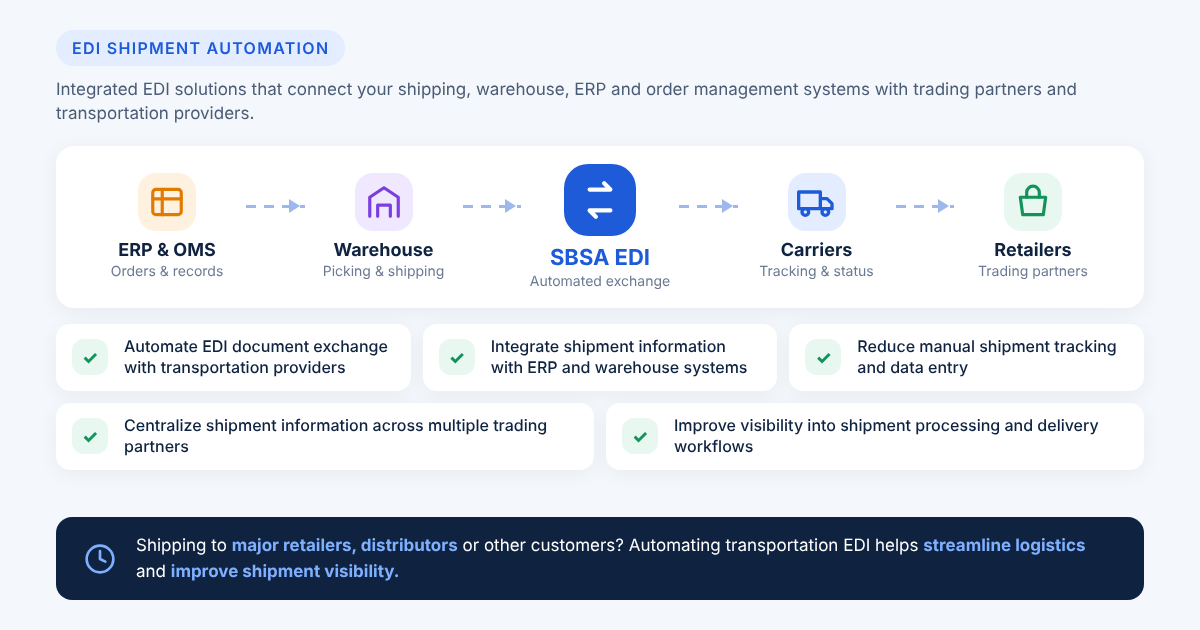 SBSA Technology helps businesses automate EDI transactions and retail vendor operations through integrated EDI solutions.
With SBSA, businesses can connect their shipping, warehouse, ERP, and order management systems with trading partners and transportation providers. Depending on carrier requirements and supported integrations, shipment tracking inquiries and status updates can be incorporated into automated workflows.
SBSA Technology can help businesses:
-
Automate EDI document exchange with transportation providers.
-
Integrate shipment information with ERP and warehouse systems.
-
Reduce manual shipment tracking and data entry.
-
Centralize shipment information across multiple trading partners.
-
Improve visibility into shipment processing and delivery workflows.
Whether your business ships to major retailers, distributors, or other customers, automating transportation-related EDI transactions can help streamline logistics operations and improve shipment visibility.
Final Thoughts
EDI 213 Motor Carrier Shipment Status Inquiry provides a standardized way for shippers and consignees to request shipment status information from motor carriers. By automating these inquiries, suppliers can reduce manual tracking efforts, improve communication, and manage shipments more efficiently.
When integrated with other transportation EDI transactions such as EDI 214, businesses can create a more connected and automated logistics workflow.
SBSA Technology helps suppliers simplify EDI integration, automate shipment-related processes, and improve retail vendor operations.
- Book a demo: sbsatech.com/consultancy
- Talk to the team: sbsatech.com/contact
- Explore the platform: sbsatech.com
- More insights: sbsatech.com/blog