
When shipping products to retailers, distributors, and customers, suppliers must provide carriers with accurate shipment information and documentation. Managing these details manually can lead to paperwork errors, delays, and communication issues.
EDI 211 (Motor Carrier Bill of Lading) allows suppliers to electronically transmit bill of lading information to motor carriers, helping automate freight documentation and improve shipment coordination.
What Is EDI 211?
EDI 211 is an ANSI X12 transaction set used to electronically transmit a Motor Carrier Bill of Lading (BOL). It provides carriers with important shipment details, including shipper and consignee information, freight descriptions, quantities, weights, reference numbers, and handling instructions.
Instead of manually preparing and sending shipping documents, businesses can exchange this information electronically through EDI.
The EDI 211 helps ensure that carriers receive accurate shipment information before transporting freight.
What Information Does EDI 211 Contain?
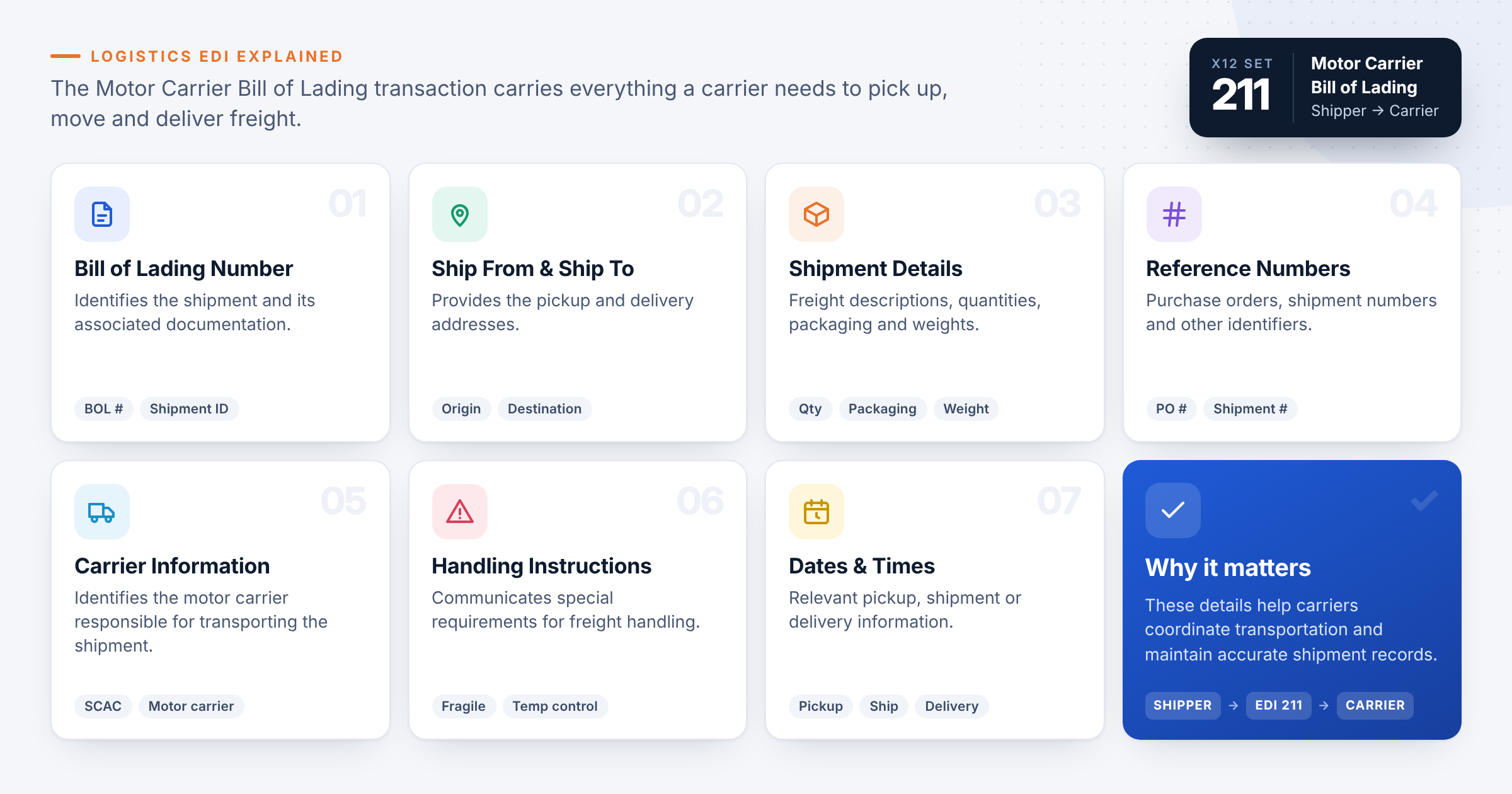 An EDI 211 transaction may include:
-
Bill of Lading Number: Identifies the shipment and its associated documentation.
-
Ship From and Ship To Information: Provides pickup and delivery addresses.
-
Shipment Details: Includes descriptions of the freight, quantities, packaging, and weights.
-
Reference Numbers: Contains purchase orders, shipment numbers, and other identifiers.
-
Carrier Information: Identifies the motor carrier responsible for transporting the shipment.
-
Handling Instructions: Communicates special requirements for freight handling.
-
Dates and Times: Includes relevant pickup, shipment, or delivery information.
These details help carriers coordinate transportation and maintain accurate shipment records.
How Does EDI 211 Work?
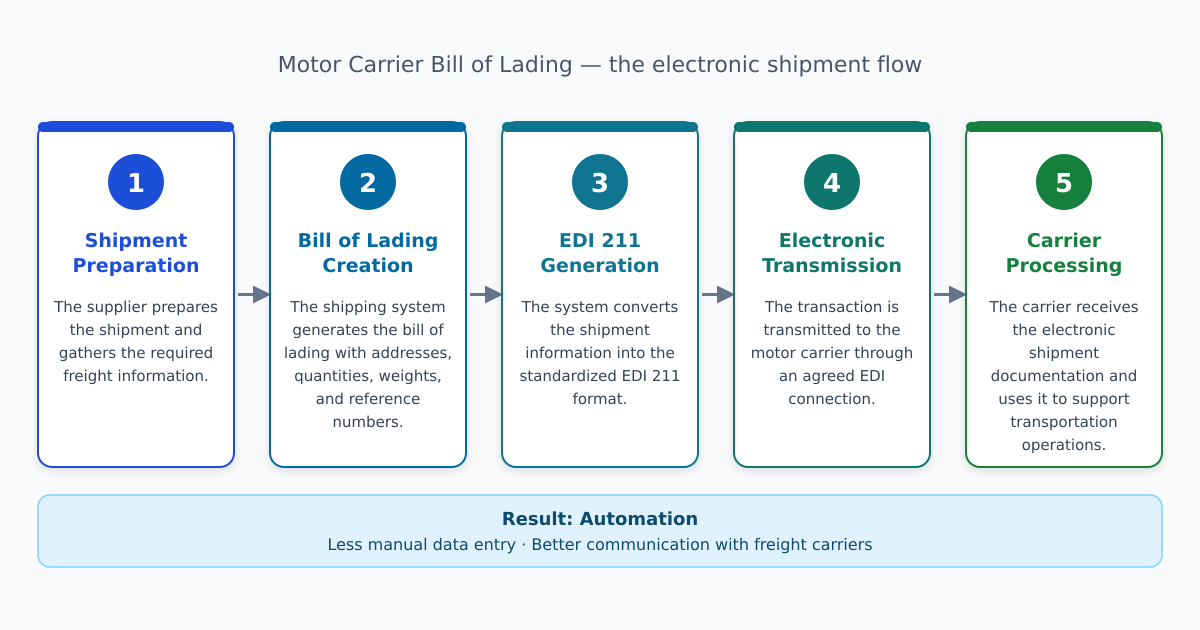 The EDI 211 process typically follows these steps:
-
Shipment Preparation: The supplier prepares the shipment and gathers the required freight information.
-
Bill of Lading Creation: The shipping system generates the bill of lading with shipment details, addresses, quantities, weights, and reference numbers.
-
EDI 211 Generation: The system converts the shipment information into the standardized EDI 211 format.
-
Electronic Transmission: The transaction is transmitted to the motor carrier through an agreed EDI connection.
-
Carrier Processing: The carrier receives the electronic shipment documentation and uses the information to support transportation operations.
By automating this process, suppliers can reduce manual data entry and improve communication with freight carriers.
Benefits of EDI 211 for Suppliers
1. Reduce Manual Shipping Documentation
EDI 211 eliminates the need to manually enter shipment information into multiple systems, reducing repetitive administrative work and the risk of documentation errors.
2. Improve Shipment Accuracy
Automated data exchange helps ensure that freight descriptions, shipment quantities, weights, addresses, and reference numbers are consistent across shipping systems.
3. Faster Carrier Communication
Suppliers can electronically transmit shipment documentation to carriers instead of relying on manual emails, phone calls, or paper documents.
4. Better Freight Coordination
Accurate shipment information allows carriers to prepare for transportation requirements and helps suppliers maintain more organized shipping workflows.
5. Improve Shipment Recordkeeping
Electronic bill of lading information can be stored and retrieved more easily, helping businesses maintain shipment records and reference documentation when needed.
EDI 211 vs. Other Transportation EDI Transactions
EDI 211 is part of a broader transportation EDI workflow. Different transaction sets serve different purposes:
-
EDI 204: Motor Carrier Load Tender – sends a freight transportation request to a carrier.
-
EDI 211: Motor Carrier Bill of Lading – provides shipment and bill of lading documentation.
-
EDI 212: Motor Carrier Delivery Trailer Manifest – provides trailer contents information for deliveries.
-
EDI 214: Transportation Carrier Shipment Status Message – communicates shipment status updates.
-
EDI 210: Motor Carrier Freight Details and Invoice – transmits freight charges and billing information.
These transactions can work together to automate transportation processes, from freight tendering and shipment documentation to tracking and billing.
How SBSA Technology Helps Automate EDI 211
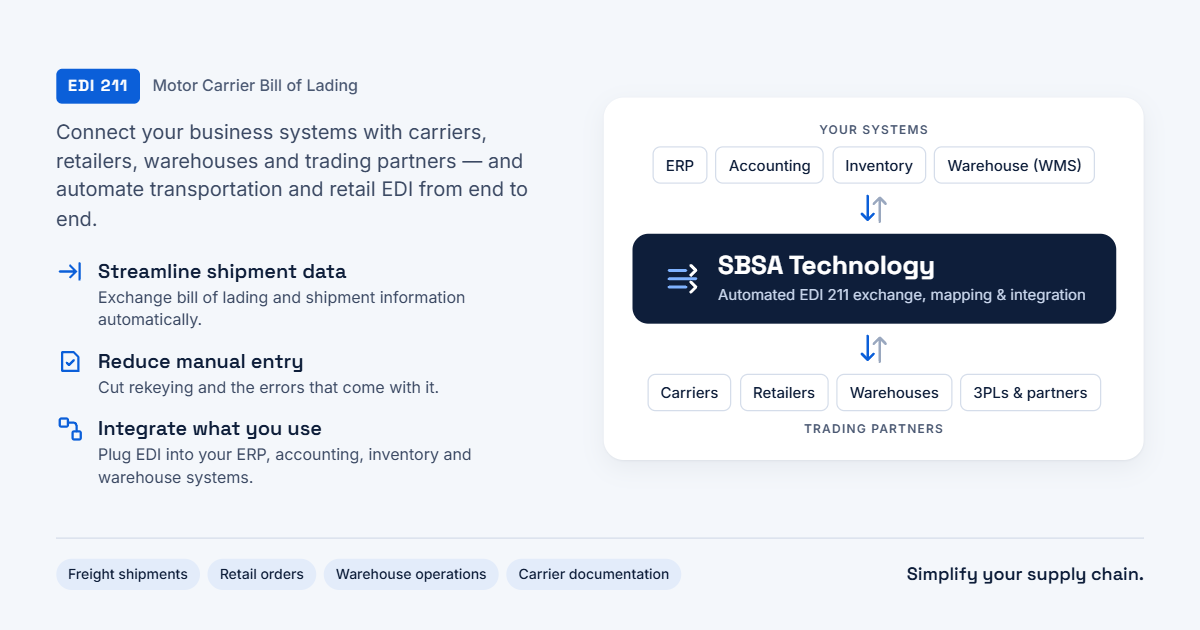 SBSA Technology helps suppliers automate transportation and retail EDI processes by connecting their business systems with carriers, retailers, warehouses, and trading partners.
With SBSA Technology, businesses can streamline shipment information exchange, reduce manual data entry, and integrate EDI transactions with their existing ERP, accounting, inventory, and warehouse systems.
Whether you are managing freight shipments, retail orders, warehouse operations, or carrier documentation, SBSA Technology provides solutions designed to simplify your supply chain operations.
Looking to automate your transportation EDI processes? Contact SBSA Technology to learn how our EDI solutions can help streamline shipment documentation and freight operations.
- Book a demo: sbsatech.com/consultancy
- Talk to the team: sbsatech.com/contact
- Explore the platform: sbsatech.com
- More insights: sbsatech.com/blog