
Freight billing is an important part of supply chain operations. However, manually processing carrier invoices, checking transportation charges, and reconciling shipping costs can create delays and costly errors.
EDI 210 (Motor Carrier Freight Details and Invoice) helps businesses automate this process by allowing freight carriers to electronically send detailed transportation invoices to shippers, suppliers, and other trading partners.
With EDI 210, companies can improve freight billing accuracy, reduce manual data entry, and streamline transportation cost reconciliation.
What Is EDI 210?
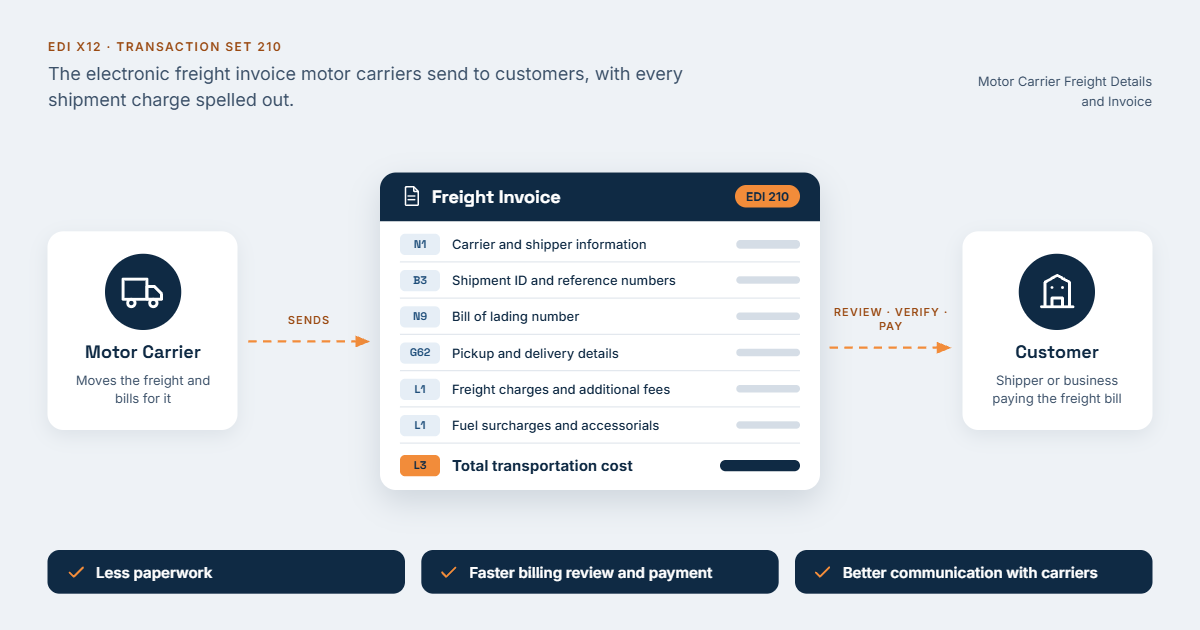
EDI 210 is an electronic document used by motor carriers to submit freight invoices and transportation charge details to their customers.
It provides information about shipment-related costs, allowing businesses to review freight charges, verify billing details, and process payments more efficiently.
Common information included in an EDI 210 transaction includes:
-
Carrier and shipper information
-
Shipment identification and reference numbers
-
Bill of lading numbers
-
Pickup and delivery details
-
Freight charges and additional fees
-
Fuel surcharges and accessorial charges
-
Total transportation costs
By exchanging this information electronically, businesses can reduce paperwork and improve communication with their transportation partners.
How Does EDI 210 Work?
The EDI 210 process typically follows these steps:
-
Shipment Completion: A motor carrier transports and delivers the shipment according to the agreed shipping arrangements.
-
Freight Invoice Creation: The carrier calculates transportation charges, including applicable fuel surcharges and additional fees.
-
EDI 210 Transmission: The carrier sends the electronic freight invoice to the shipper or supplier.
-
Invoice Validation: The receiving system checks shipment references, freight charges, and billing information against existing shipment records.
-
Payment Processing: Once verified, the freight invoice can be approved and forwarded to the company's accounting or ERP system.
This automated workflow helps businesses process freight invoices faster while minimizing discrepancies.
Benefits of EDI 210 for Suppliers
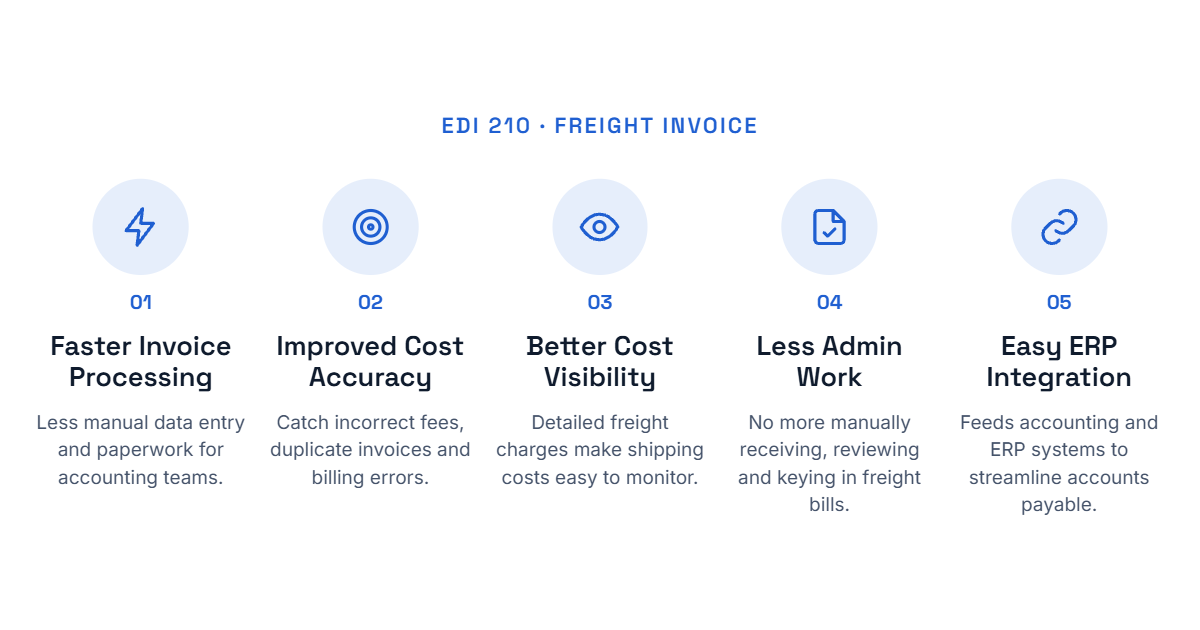
1. Faster Freight Invoice Processing
Automating freight invoice exchanges reduces manual data entry and paperwork, helping accounting teams process transportation bills more efficiently.
2. Improved Freight Cost Accuracy
EDI 210 allows businesses to compare carrier charges against shipment records, helping identify incorrect fees, duplicate invoices, and billing discrepancies.
3. Better Transportation Cost Visibility
Detailed freight charges give businesses better visibility into shipping expenses, making it easier to monitor transportation costs.
4. Reduced Administrative Work
Electronic invoice processing eliminates repetitive tasks associated with manually receiving, reviewing, and entering freight bills.
5. Easier Accounting and ERP Integration
EDI 210 data can be integrated with accounting and ERP systems, helping businesses maintain accurate financial records and streamline accounts payable workflows.
EDI 210 vs. EDI 204 and EDI 214
These EDI transactions serve different purposes in transportation management:
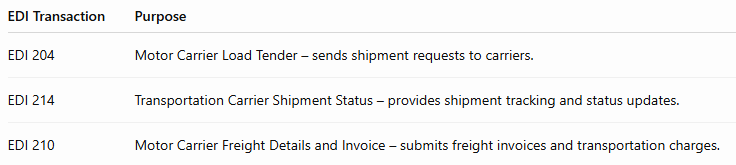
Together, these transactions help businesses manage freight scheduling, shipment visibility, and transportation billing.
How SBSA Technology Can Help
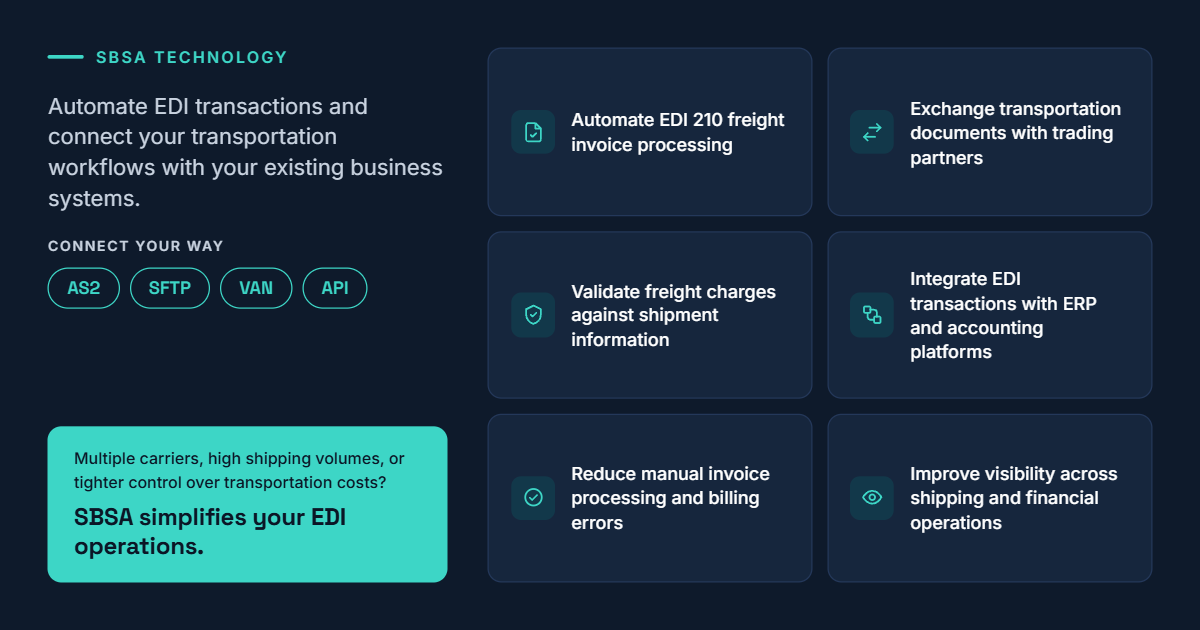
SBSA Technology helps businesses automate EDI transactions and connect transportation workflows with their existing business systems.
With SBSA, companies can:
-
Automate EDI 210 freight invoice processing.
-
Exchange transportation documents with trading partners.
-
Validate freight charges against shipment information.
-
Integrate EDI transactions with ERP and accounting platforms.
-
Reduce manual invoice processing and billing errors.
-
Improve visibility across shipping and financial operations.
SBSA supports EDI integration through multiple communication methods, including AS2, SFTP, VAN, and API connections.
Whether your business works with multiple carriers, manages high shipping volumes, or needs better control over transportation expenses, SBSA can help simplify your EDI operations.
Automate Your Freight Billing with SBSA Technology
Manual freight invoice processing can slow down accounting operations and make transportation costs harder to manage.
With EDI 210 automation, suppliers can streamline freight billing, improve invoice accuracy, and maintain better control over transportation expenses.
Contact SBSA Technology today to learn how our EDI automation solutions can simplify freight invoicing and connect your transportation operations with your business systems.
- Book a demo: sbsatech.com/consultancy
- Talk to the team: sbsatech.com/contact
- Explore the platform: sbsatech.com
- More insights: sbsatech.com/blog