
Managing freight shipments involves coordinating carriers, scheduling pickups, and communicating shipment details. When these processes are handled manually, suppliers may experience delays, communication errors, and inefficient transportation planning.
EDI 204 (Motor Carrier Load Tender) helps automate this process by allowing suppliers and shippers to electronically send freight shipment requests to motor carriers.
What Is EDI 204?
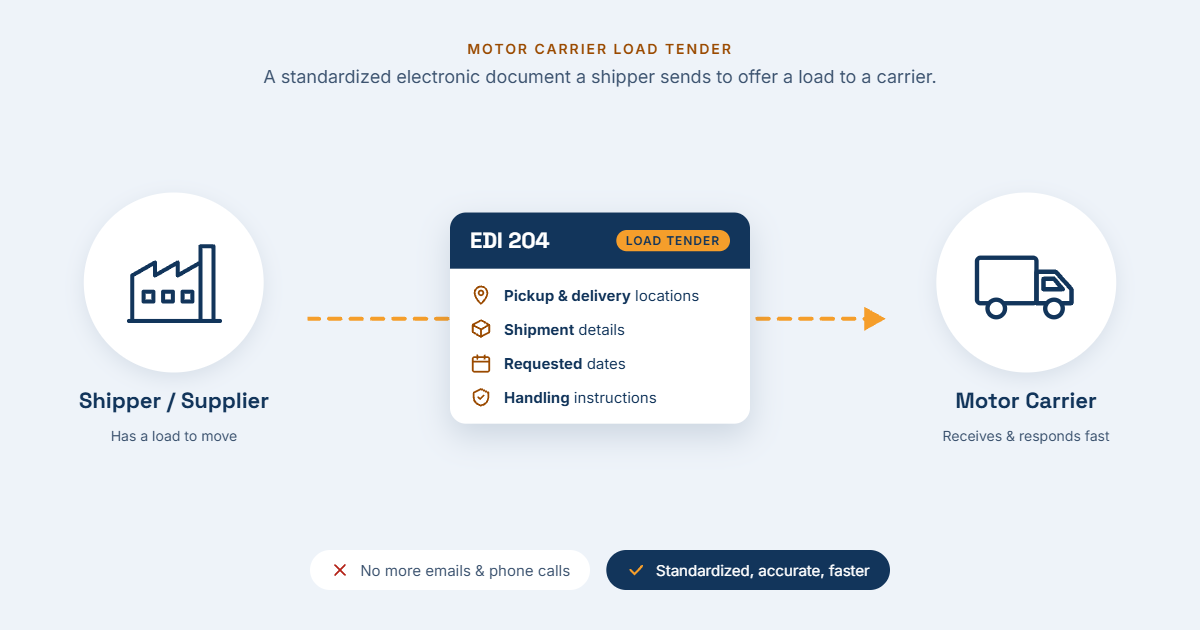 EDI 204 is an electronic document used to offer a shipment or load to a motor carrier. It communicates important transportation details, including pickup and delivery locations, shipment information, requested dates, and handling instructions.
Instead of sending load details through emails or phone calls, suppliers can transmit standardized EDI 204 documents directly to their transportation partners.
This helps carriers receive accurate shipment information and respond more efficiently to freight requests.
How Does EDI 204 Work?
The EDI 204 process typically follows these steps:
-
Create a Load Tender: The supplier generates an EDI 204 containing shipment details, pickup and delivery addresses, freight information, and scheduling requirements.
-
Send to the Carrier: The EDI document is transmitted electronically through AS2, SFTP, VAN, or an API-supported connection.
-
Carrier Reviews the Request: The motor carrier receives the load tender and reviews the shipment requirements.
-
Carrier Responds: The carrier can accept or reject the load, commonly using EDI 990 (Response to a Load Tender).
-
Coordinate Shipment Execution: Once accepted, the supplier and carrier proceed with pickup scheduling and transportation arrangements.
Key Information Included in EDI 204
An EDI 204 document may contain:
-
Shipment identification and load reference numbers
-
Carrier and transportation details
-
Pickup and delivery addresses
-
Requested pickup and delivery dates
-
Freight descriptions and quantities
-
Weight, packaging, and handling requirements
-
Special delivery or transportation instructions
These details help carriers understand shipment requirements before accepting a load.
Benefits of EDI 204 for Suppliers
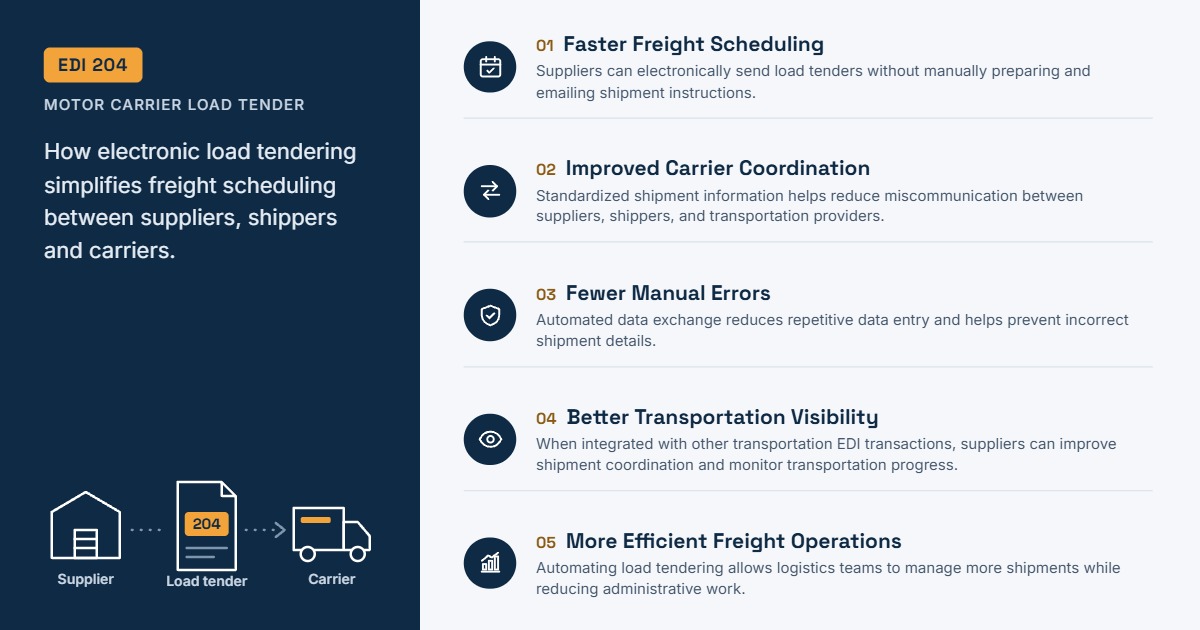 1. Faster Freight Scheduling
Suppliers can electronically send load tenders without manually preparing and emailing shipment instructions.
2. Improved Carrier Coordination
Standardized shipment information helps reduce miscommunication between suppliers, shippers, and transportation providers.
3. Fewer Manual Errors
Automated data exchange reduces repetitive data entry and helps prevent incorrect shipment details.
4. Better Transportation Visibility
When integrated with other transportation EDI transactions, suppliers can improve shipment coordination and monitor transportation progress.
5. More Efficient Freight Operations
Automating load tendering allows logistics teams to manage more shipments while reducing administrative work.
EDI 204 vs. EDI 990 vs. EDI 214
These three EDI transactions support different stages of transportation management:
-
EDI 204 – Motor Carrier Load Tender: Sends a freight shipment request to a carrier.
-
EDI 990 – Response to a Load Tender: Communicates the carrier's acceptance or rejection of the load.
-
EDI 214 – Transportation Carrier Shipment Status: Provides shipment status updates during transportation.
Together, these transactions help automate communication between suppliers and their transportation partners.
How SBSA Technology Can Help
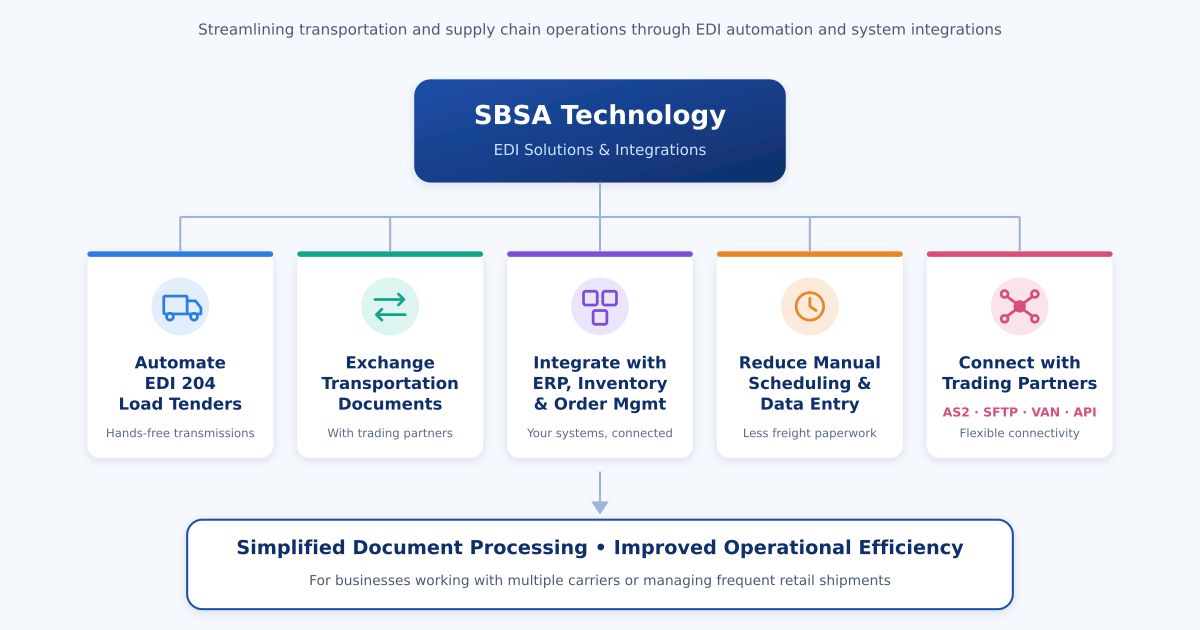 SBSA Technology helps suppliers streamline transportation and supply chain operations through EDI automation and system integrations.
Our EDI solutions can help businesses:
-
Automate EDI 204 load tender transmissions.
-
Exchange transportation documents with trading partners.
-
Integrate EDI transactions with ERP, inventory, and order management systems.
-
Reduce manual freight scheduling and data entry.
-
Connect with trading partners using AS2, SFTP, VAN, and API integrations.
Whether your business works with multiple carriers or manages frequent retail shipments, SBSA Technology can help simplify transportation document processing and improve operational efficiency.
Final Thoughts
EDI 204 helps suppliers automate freight scheduling by electronically communicating shipment requirements to motor carriers. When combined with EDI 990 and EDI 214, it creates a more connected transportation workflow that improves coordination, reduces manual work, and supports more efficient freight management.
Looking to automate your transportation and EDI processes? Contact SBSA Technology to learn how our EDI solutions can support your business.
- Book a demo: sbsatech.com/consultancy
- Talk to the team: sbsatech.com/contact
- Explore the platform: sbsatech.com
- More insights: sbsatech.com/blog